


The Zambezi Region – formerly known as the Caprivi Strip – was easily our favourite part of Namibia.
It’s greener, wetter and much more lush than the classic Namibia landscapes further south and west, with rivers full of hippos, a couple of wonderfully little visited (and wildlife rich) national parks and some fantastic places to stay.
Fifteen years ago, my husband and I travelled around Namibia on our honeymoon, following the fairly classic Windhoek-to-Windhoek circuit, and missing out this part of the country completely.
When we returned with our kids, aged 12 and 14, we wanted them to experience Namibia and it’s wonderful scenery and wildlife – but also wanted to explore somewhere new ourselves.
So, to give us more time, we left Sossusvlei out of our 3 week Namibia, Botswana and Victoria Falls self-drive itinerary and headed east after Etosha instead.
Driving through the Zambezi Region also gave us a natural route into Botswana and onwards to Victoria Falls – both places none of us had ever been to!
It was absolutely worth it. In fact, if we did the trip again, I’d choose the Zambezi Region over Sossusvlei again without hesitation.
This Zambezi Region (Caprivi Strip) Namibia itinerary follows the route we actually drove, including where we stayed, how we self-drove Bwabwata and Mudumu National Parks, what we’d change and the places we’d happily go straight back to.
Disclaimer: This post contains affiliate links. Should you click on a link to purchase, it is at no extra cost to you, but I receive a small commission, which helps to support this blog! Views are always my own. See my privacy policy for more information.
Where is the Caprivi Strip? A very quick history
The Zambezi Region is that peculiar long, narrow finger of Namibia stretching east between Angola, Zambia and Botswana. It’s surrounded by major rivers and feels very different from the much drier Namibia further west.
The shape dates back to colonial rule. In 1890, an agreement between Germany and Britain made the area part of German South West Africa. The strip was named after the German Chancellor at the time, Georg Leo von Caprivi.
Today it’s the Zambezi Region, although you’ll still see Caprivi Strip or simply Caprivi everywhere in travel guides, maps and online searches – which is why I use both names in this post.
Where this fits into our Namibia road trip: We reached the Zambezi Region after travelling from Windhoek through Spitzkoppe, Swakopmund, Brandberg and Etosha. From Etosha’s eastern gate (Namutoni), we headed north east to drive right through the Zambezi Strip, then continued east into Botswana and eventually Victoria Falls. This post zooms in on the Zambezi Region part of the journey which I found hardest to find information about; for the complete route, see our 3 week Namibia, Botswana and Victoria Falls self-drive itinerary post.
Our Zambezi Region (Caprivi Strip) itinerary at a glance
This section of our trip started after one night near the eastern gate of Etosha National Park. From here we travelled north and east, driving through the strip from west to east, eventually crossing into Botswana at Ngoma Bridge.
🏕️ Camping? We chose not to camp on this trip (more info on why here!), but each of these spots has campsites too – so this route works for any sort of self drive traveller.
Use the interactive map below to follow our route through Namibia’s Zambezi Region (the Caprivi Strip), and click on each numbered stop for accommodation details and links.
Stop | Our stay | Why it’s worth stopping |
|---|---|---|
Lunch stop | An easy and rather quirky break on the long drive from Etosha’s eastern gate towards Rundu | |
1 night | Relax by the Okavango River; we could happily have stayed two | |
2 nights | Gorgeous river setting, boat trip, island walk and nearby Living Museum | |
Mahango & Buffalo Core Areas | En route | Two wonderful wildlife areas within Bwabwata National Park |
2 nights | Our favourite stay, with excellent food, wildlife and boat trips | |
Mudumu National Park | Day trip | Very little-visited self-drive safari close to Camp Kwando |
You could race through the Caprivi Strip much faster than this, but I really wouldn’t. There is so much to see and do there, and the stops we made are definitely not just inconvenient interruptions on the way to Botswana!
Roy’s Rest Camp: a useful stop between Etosha and Rundu
The drive from Etosha’s eastern gate towards Rundu is a long one – more than five hours on the road – although the road itself is good tar and very straightforward to drive.
We broke the journey with lunch at Roy’s Rest Camp, which is right beside the B8 so requires virtually no detour.
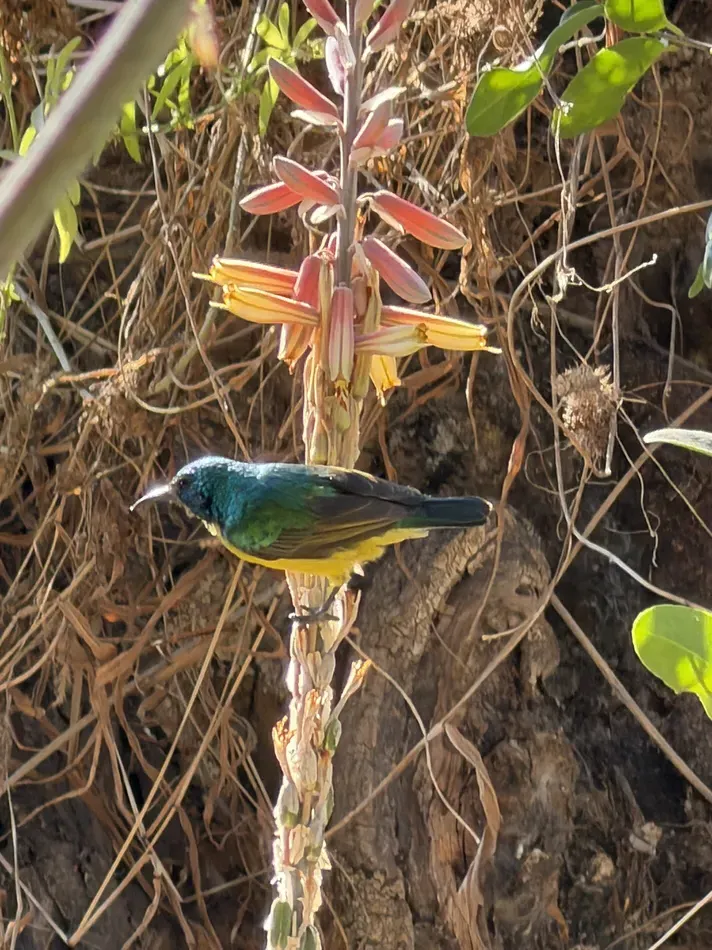
It’s a quirky, colourful little place surrounded by bush, with old cars, vintage signs, bits of old garage equipment and other things the owners seem to have collected over the years dotted around the grounds. There’s also a small pool and loads of beautiful birds flitting around the trees.

One useful thing you need to know is that you need to arrange lunch in advance rather than simply turning up expecting a restaurant menu. Ideally you’d book this a few days in advance, on bookings@royscamp.com.na.
I was nowhere near organised enough for this, but I found a WhatsApp number for Roy’s, so I messaged them that morning (+264 81 625 4881) and they offered to make us toasted sandwiches for lunch the same day, which was perfect.
Don’t just turn up – they may not be able to accommodate your lunch needs otherwise.
We didn’t stay overnight, but I think it would make a great option if you have enough time to split the journey into two days (it offers rooms and campsites). Otherwise, it worked perfectly for us as somewhere to eat, stretch our legs and break up a fairly hefty driving day.
Hakusembe River Lodge
From Roy’s, we continued east towards Rundu and Hakusembe River Lodge Camping2Go, right on the Okavango River.
The final drive into the lodge felt considerably more off the beaten track than the main road. The access roads became narrow and sandy, and there were definitely moments when we were pleased we had a 4×4.
This was a fun introduction to the fact that, while the main road across the Zambezi Region is easy, getting to some of the places along it can be rather more adventurous.
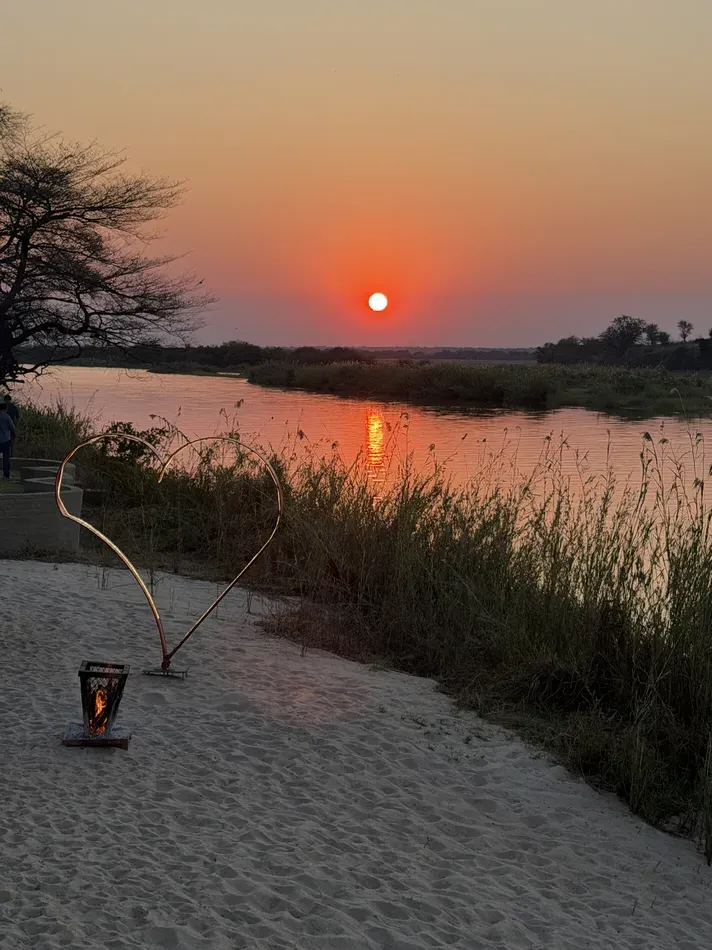
This was also where the landscape really started to feel different. After the dry scenery we’d been driving through, suddenly there was water, greenery and Angola sitting just across the river.
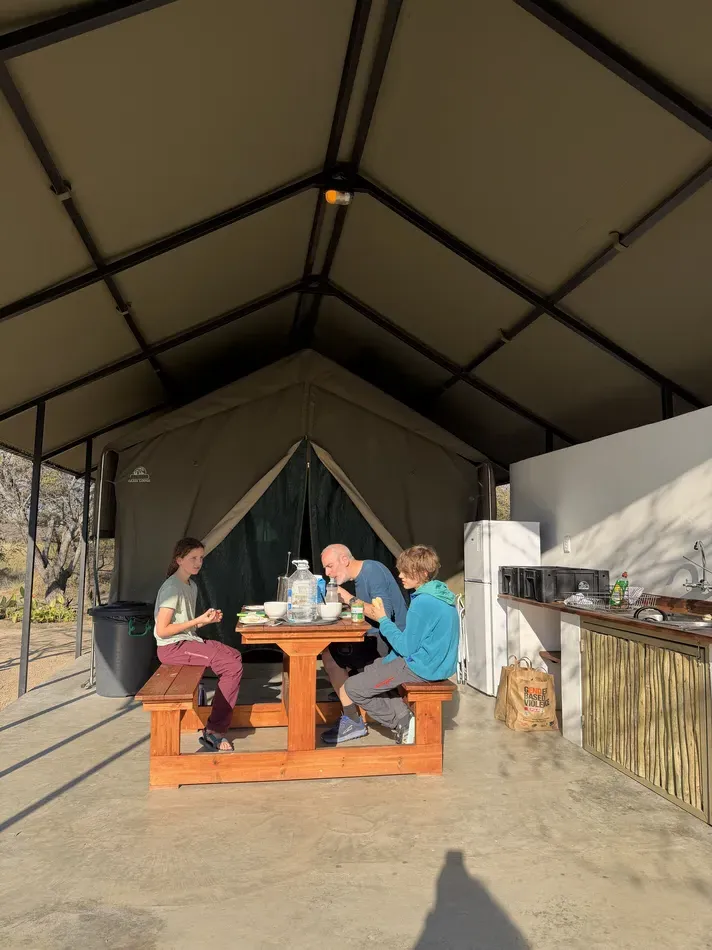
Hakusembe River Lodge has plenty of conventional rooms and chalets, but we went for one of the much better-value self-catering safari tents in their “Camping2Go” section. If you’re camping, there’s also a campsite here!
We checked in at the main lodge, and despite paying substantially less for our accommodation, were welcomed just the same as other guests and definitely didn’t feel like second class citizens, which I really appreciated!
Ours had proper beds, a full field kitchen looking out over the river, and a great bathroom, so it certainly wasn’t roughing it. We had everything we needed to make breakfast ourselves, while still having the option to eat at the main lodge – which we did for dinner.
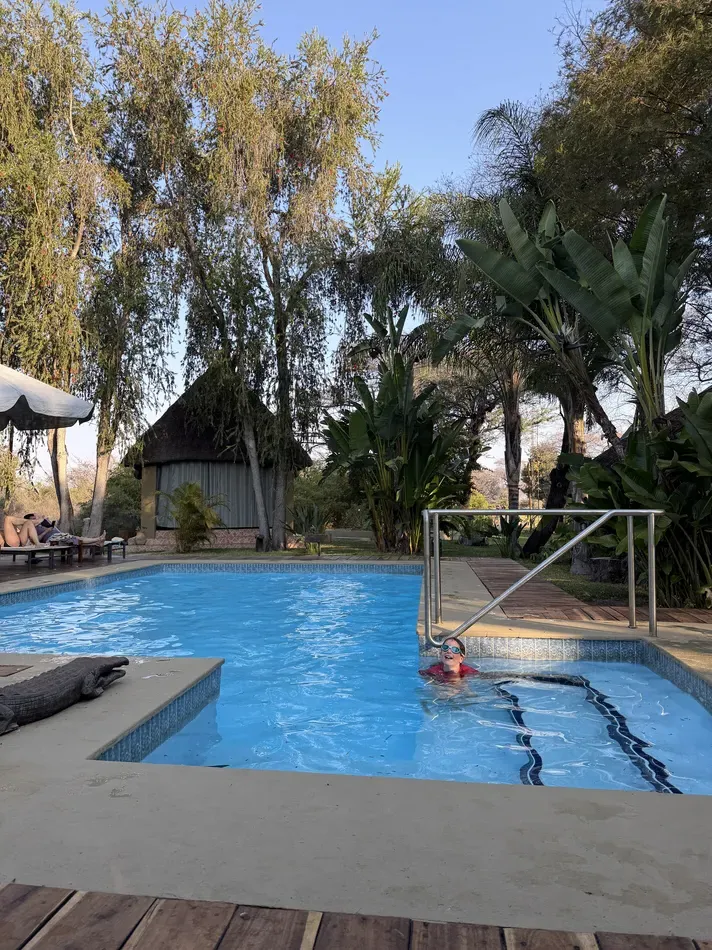
You can use all the lodge facilities which was great, as there’s a lovely pool and plenty of space to sit by the river, and in hindsight we could easily have stayed for two nights.
It is a pretty big resort though, which caters to larger tour groups, so be aware of that. However as a result, it’s slick and well organised, and we didn’t feel overwhelmed by groups where we were there.

Eating at Hakusembe River Lodge
Although our safari tent had a proper self-catering kitchen, you can also eat at the main lodge, which offers a buffet breakfast, à la carte lunch and a buffet dinner.
We chose to make our own breakfast but booked dinner in the lodge. At the time of writing, the dinner buffet costs N$572 per person, while children aged 6–13 get 50% off meals.
One warning: don’t trust your watch. Angola is directly across the river, and our watches and phones decided we’d crossed the border while we weren’t looking. They switched to Angolan time, an hour behind Namibia, and we wandered into dinner an hour late without having the faintest idea. Fortunately, they still fed us!
Activities at Hakusembe River Lodge
Hakusembe offers sunset boat trips on the river, but we skipped this because we only had one night and knew we had several boat trips coming later in the Zambezi Region.
The following morning, after breakfast, we visited the Mbunza Living Museum where local guides demonstrate traditional skills and ways of life of the Bantu people of the Okavango river, before continuing east, which was a short drive (or even a walk) from the lodge.
We learnt about everything from making fire and traditional fishing methods to food, crafts, black smithing and everyday life, with plenty of opportunities to have a go ourselves. It gave us some context for the communities we were driving through along the Kavango.

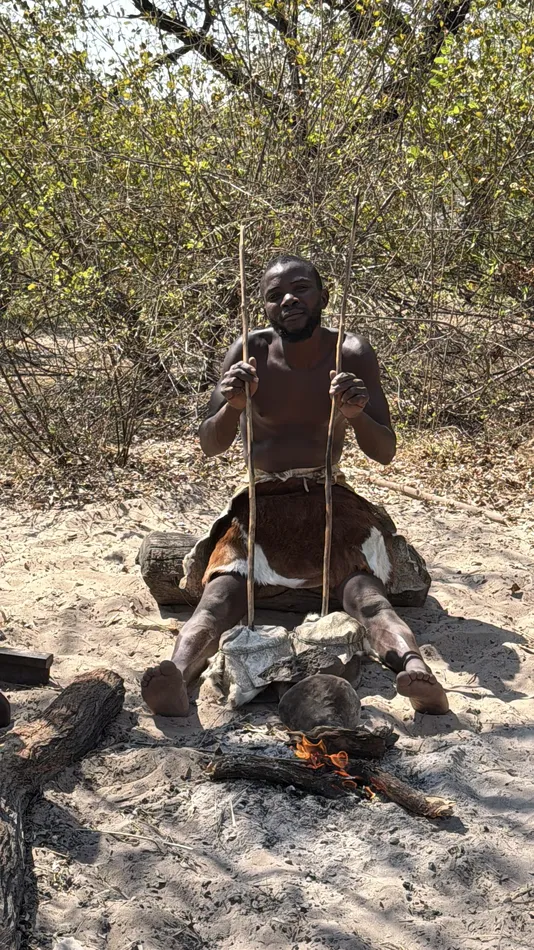
It felt a little awkward at times, but I’m glad we went, as it is a community-run cultural experience which directly supports local people and helps traditional skills and culture to be passed on and kept alive.
Then it was back in the car and onwards towards the Divundu area – where hippos started to make an appearance!
Mobola Island Lodge
After we left Hakusembe and the Mbunza Living Museum, we stopped in Rundu to fill up with fuel before continuing east towards Divundu and Mobola Island Lodge, where we stayed for two nights.
⛽Fuel isn’t particularly difficult to find along the Zambezi Region’s main B8 road. There are filling stations in the bigger towns, but the distances are long enough that it’s still worth filling up when you have a sensible opportunity, rather than waiting until the warning light comes on.
The final section into Mobola Island Lodge once we’d left the tarmac of the B8 was rather more adventurous, with sandy roads where we were once again pleased to have a 4×4.
We stayed for two nights in one of the four-bed family bungalows, and it was a brilliant set-up for us. The large thatched bungalow had two separate, super comfy bedrooms, a spacious living area, two lovely ensuite showers and a properly equipped kitchen, so self-catering was genuinely easy.
It was also really comfortable. We had a covered terrace overlooking the Okavango River, an outside shower with a river view and places to braai (BBQ) both on the terrace and right beside the river. For a family of four travelling for three weeks, having plenty of space to spread out for a couple of nights was very welcome.
Mobola itself has a wonderfully wild setting on the Okavango. One of its most distinctive features is it’s own private island, reached via a long suspension footbridge from the mainland part of the lodge. There’s a little bar, deck and dining area out on the island and places to sit overlooking the water, so it’s a great spot for a drink at the end of the day.


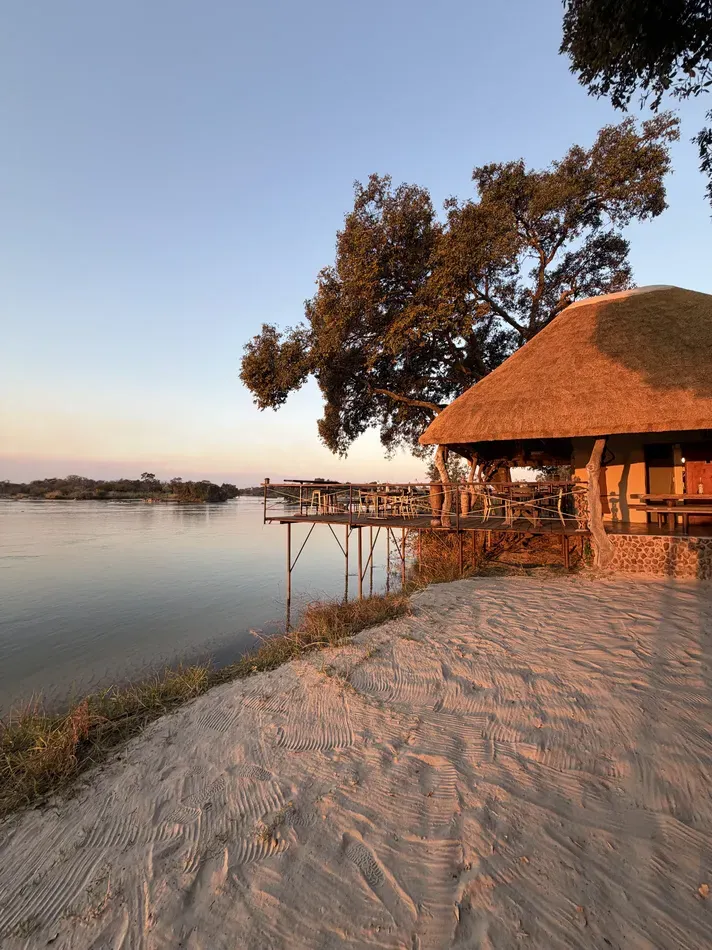
There is also a natural swimming pool filled with filtered river water. Of all the places we stayed, this is the one place we didn’t swim, as the water is a little murky (fair, as it’s come from the river), but the various warnings about snakes in the surrounding area didn’t make me particularly keen to get in!
Mobola also did a load of laundry for us for a small fee – extremely useful when four people are travelling for three weeks with hand luggage only! (There’s more on how we managed that in our Namibia Botswana packing list here).
Activities at Mobola Island Lodge
We spent one afternoon combining Mobola’s Okavango Island Walk with an Okavango River boat cruise, and I’d recommend doing both if you have time.
The island walk is guided and takes you through thick vegetation in an area also used by hippos. Our guide was excellent, but after he’d spent a reasonable amount of time explaining just how dangerous and unpredictable hippos can be, I became increasingly aware that we were walking through the places where they rest during the day.
At one point we could hear hippos nearby without being able to see them. I found this considerably more alarming than the rest of my family appeared to.
The subsequent boat trip felt positively relaxing by comparison!
We saw huge crocodiles, plenty of hippos including calves and lots of birdlife, finishing with another beautiful sunset over the river. At one point the boat also briefly crossed to the Angolan side of the river, so technically we popped into Angola for a few minutes too.
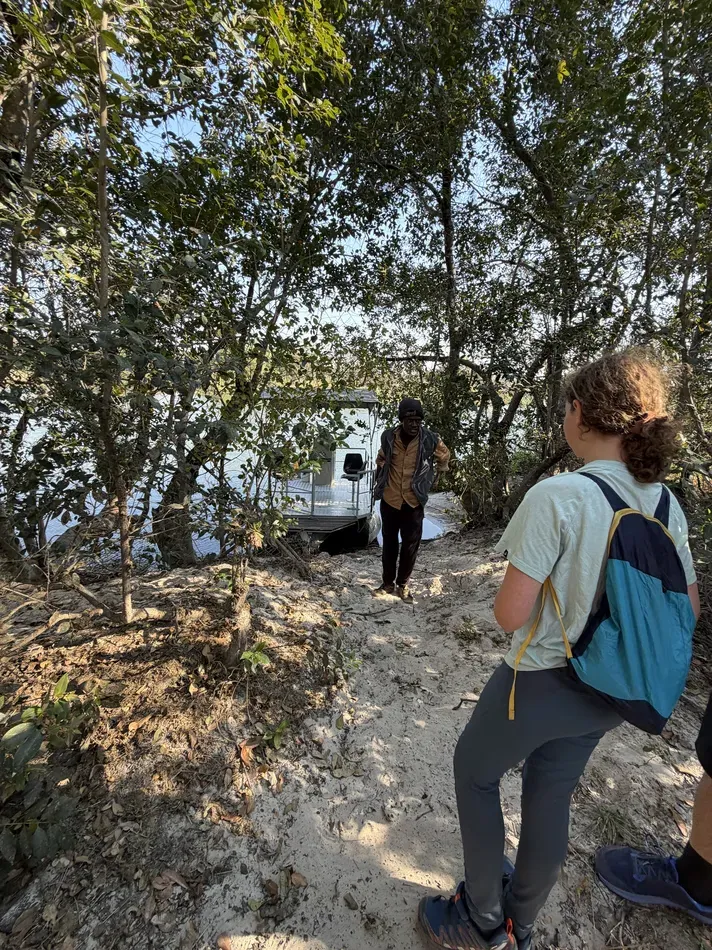
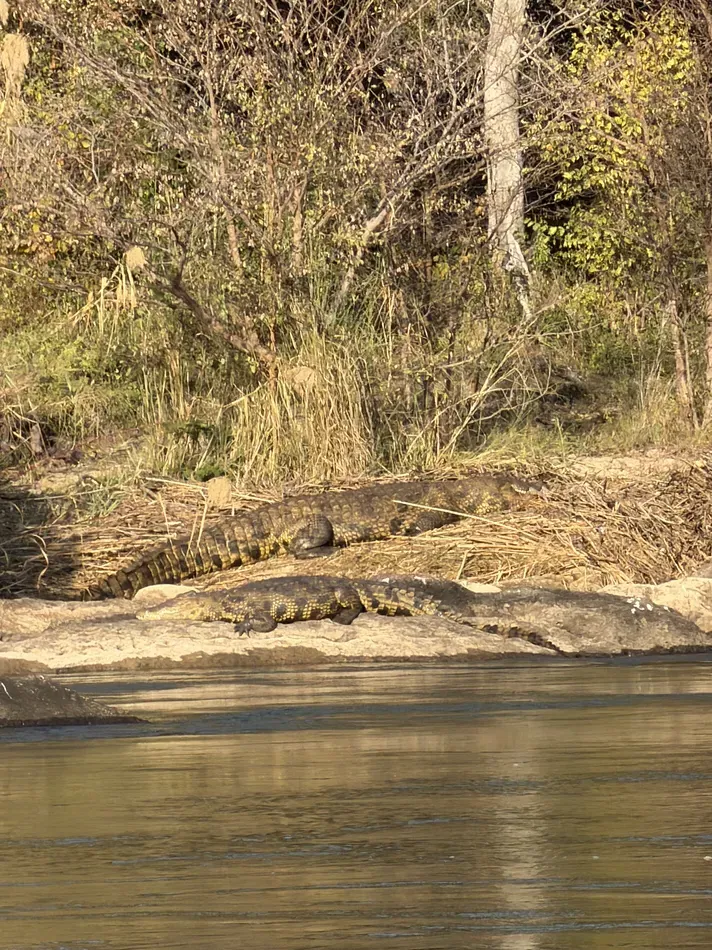
Doing the walk and cruise together worked really well. You experience the river environment on foot first and then from the water, and it felt completely different from the game drives we’d been doing elsewhere in Namibia.
With two nights at Mobola, we also had time simply to enjoy the lodge and watch the hippos from the island rather than filling every available hour with an activity. I’d definitely keep two nights here in this Zambezi Region itinerary.
Eating at Mobola Island Lodge
The family bungalow had excellent self-catering facilities, so Mobola is a good choice if you’d rather cook for yourselves. Bring your food with you, though. You can buy braai packs at the lodge, but there isn’t a full shop where you can stock up for your stay.
You don’t have to self-cater completely. Breakfast and dinner (a set menu) can be ordered in advance, and we had a great breakfast delivered to our own veranda, which was a pretty good start to the day.
At the time of writing, breakfast costs N$210 per person and dinner N$400 per person. Both need to be arranged in advance, so I’d organise them with Mobola before you arrive rather than relying on being able to order on the day.
From Mobola, our Caprivi Strip self-drive continued east – but rather than simply following the main B8 road, we spent the next morning exploring two of Bwabwata National Park’s core wildlife areas: Mahango and Buffalo. This was one of the parts of the trip I’d found hardest to research beforehand, so I’m going to go into a bit of detail here!
Self-driving Bwabwata National Park
This was one of the parts of our Zambezi Region Namibia itinerary that I found surprisingly difficult to research before we went. There was plenty of information saying Bwabwata National Park existed, but much less suggesting the best way actually visit it on a self-drive trip.
So, here’s what I wish I’d known.
Bwabwata is huge, stretching roughly from the Okavango River near Divundu in the west to the Kwando River in the east, with the B8 running through the park. It takes up the whole height of the Zambezi strip, from the Angolan border in the north to the border with Botswana in the south. Unlike Etosha National Park, though, it isn’t simply one enormous fenced wildlife reserve.
People live within Bwabwata, and the park is managed to combine conservation with the needs of its resident communities. The central section is a multiple-use area, while the principal wildlife conservation areas (core areas) sit towards either end of the park.
For visitors, the three names to know are:
- Mahango Core Area – beside the Okavango in the west
- Buffalo Core Area – also beside the Okavango, on the opposite side of the river
- Kwando Core Area – much further east, beside the Kwando River
Bwabwata has seriously good wildlife. There are large populations of elephant and buffalo, alongside sable and roan antelope, while predators include lion, leopard, cheetah and hyena. Importantly, Bwabwata is also one of Namibia’s remaining strongholds for African wild dogs. Along the rivers you can find hippos, red lechwe, sitatunga and reedbuck, and the birdlife is excellent too.
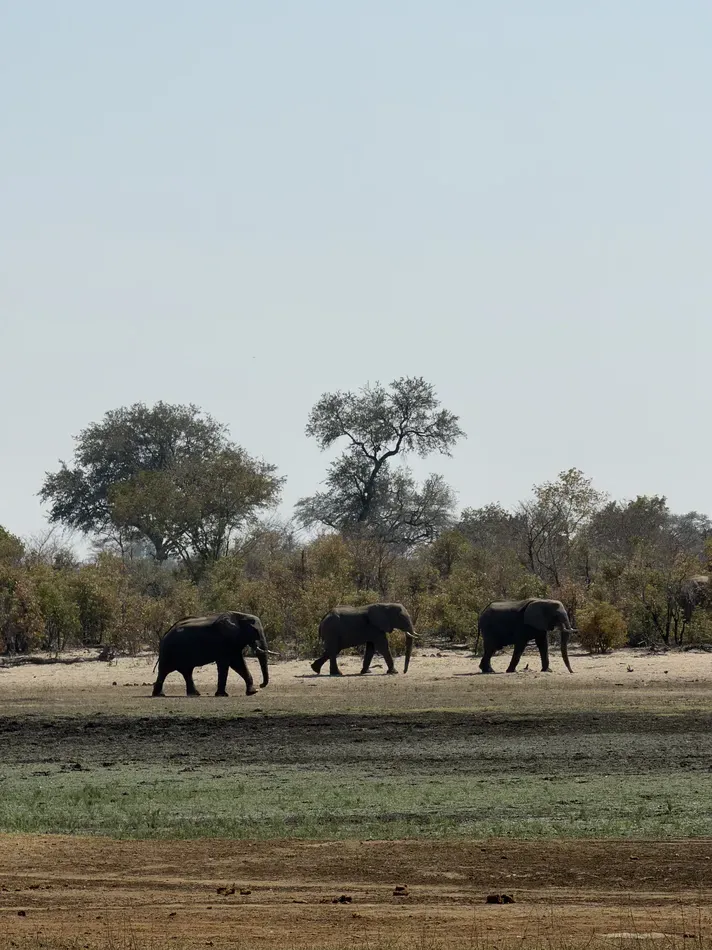
We visited Mahango and Buffalo on the same day, driving via both on our journey from Mobola towards Camp Kwando.
We didn’t visit Kwando Core Area – and I wish we had! This is definitely something I’d change if we did this route again.
Entry permits for Bwabwata National Park
Entry permits for the Bwabwata core areas are valid for 24 hours, which is useful if you’re visiting more than one area. We paid when we entered Mahango and then used the same permit later that day at Buffalo Core Area, rather than having to pay the park fees twice.
Getting the permit was very straightforward. Drive up to the entrance gate, where you’ll find an obvious barrier, park and head into the rather dusty little office to pay. In our experience, the staff member handling permits wasn’t exactly bursting with enthusiasm or information, but the actual process was easy enough.
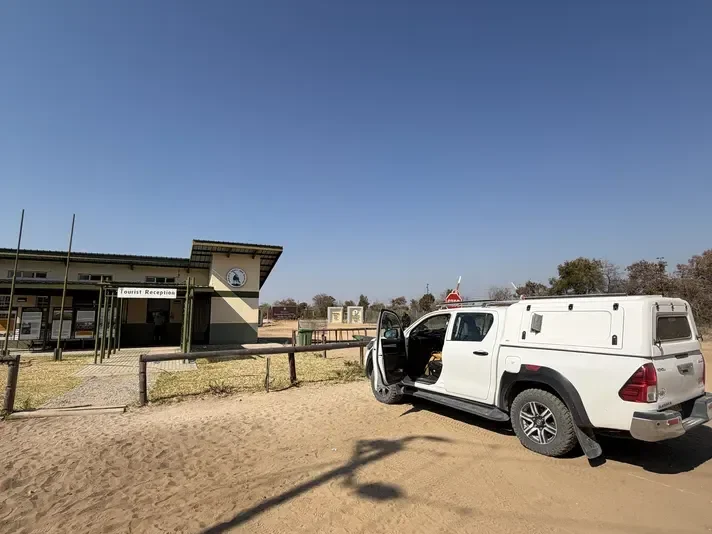
When we visited, the fees for international visitors were:
- Adults: N$200 per person
- Children aged 9–16: N$150 per child
- Vehicle with 10 seats or fewer: N$60
These are the international visitor rates; entry fees are lower for Namibian citizens and visitors from SADC (Southern African Development Community) countries.
For our family of four – two adults, a 12-year-old and a 14-year-old – that came to N$760 for the 24-hour permit including our vehicle, which is around £35. Bargain.
Most importantly, keep your receipt/permit somewhere handy. We needed to show it when entering the next core area to prove we’d already paid.
Don’t necessarily expect the permit office to give you a detailed briefing on routes, road conditions or what to see. I’d arrive with your route roughly planned, offline maps downloaded and ideally the Bwabwata booklet I mention below, rather than relying on the gate for information.
There are also a few shaded picnic tables around the entrance gates to the core areas. We stopped at one for our picnic lunch between game drives – they’re simple, but very useful when you’ve been sitting in the car all morning.
Mahango Core Area
We started with Mahango, on the western side of Bwabwata beside the Okavango River.
There are different routes through Mahango, and this is where having some idea of the road conditions matters. We chose the gravel route running closer to the river, rather than taking the sandier western route.
That gave us plenty of wildlife and beautiful river scenery without worrying about getting stuck in deep sand before breakfast.
We spent about two hours driving through Mahango, although you could easily allow longer if you wanted a slower game drive. The river and floodplain habitat is particularly important for wildlife; and we saw hippo, warthogs, vultures, reedbuck, buffalo, baboons, vervet monkeys, a monitor lizard, as well as elephants and a huge variety of birds.
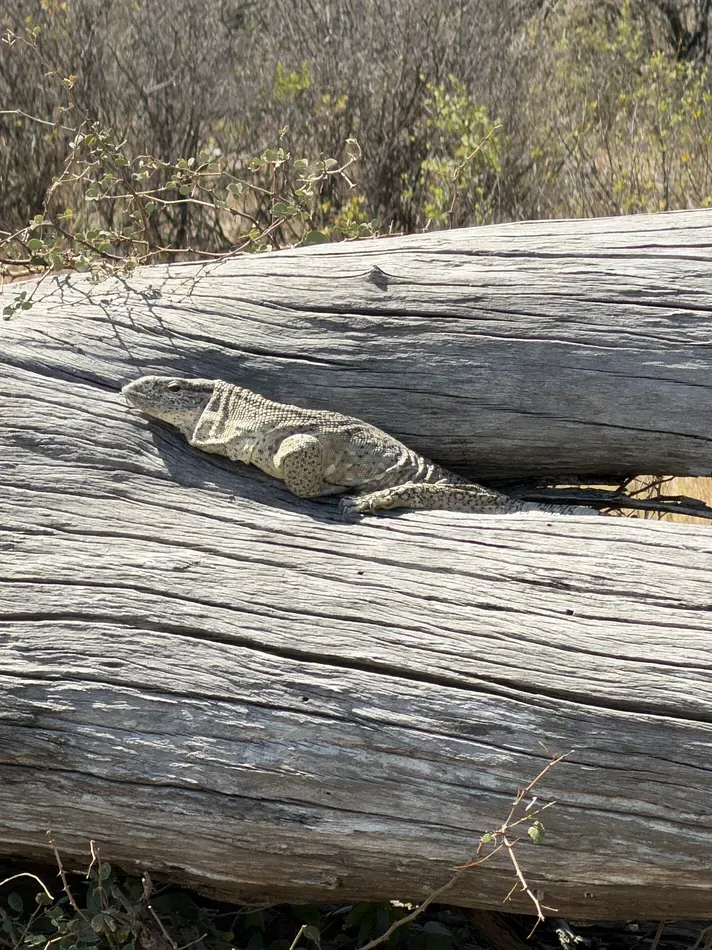
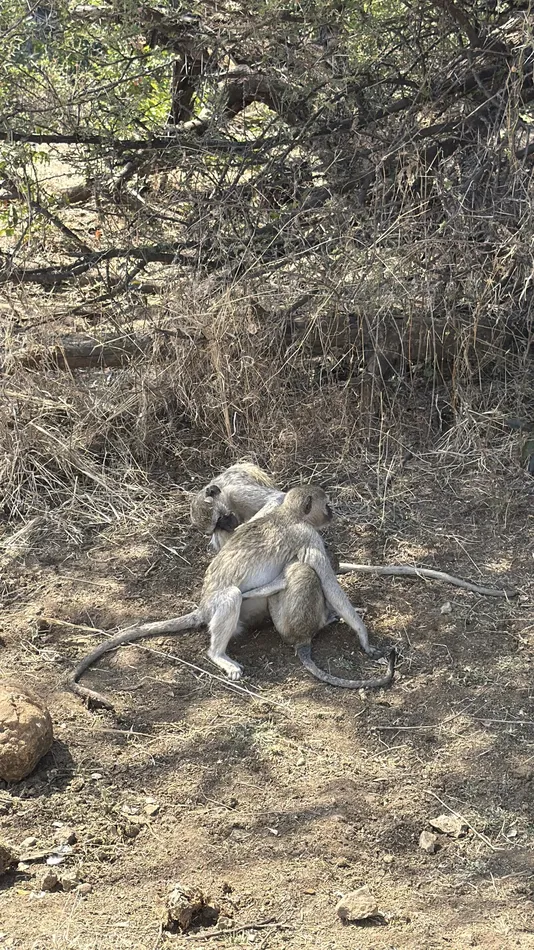
There are a few marked stops along the river route near massive baobab trees where you are allowed get out of your vehicle, but unlike in Etosha, nothing is fenced, so exercise extreme caution!
What struck us most was how few other vehicles there were. We’d just come from Etosha, where it’s quite normal for several cars to gather around a good wildlife sighting. In Mahango, we often felt as though we had the place to ourselves.
Buffalo Core Area
After Mahango, we crossed over to the Buffalo Core Area, which lies on the other side of the Okavango River.
To get there, annoyingly you have to drive right back to Divundu on the main road, turn right to cross over the Okavango and then turn right again about 12 km later. From entrance gate to entrance gate takes around 30 minutes even though you can literally see Buffalo Core Area from the other side of the river in Mahango Core Area!
One thing that makes Buffalo feel quite different from Mahango is the old military infrastructure dotted around the area. The ruined base from Namibia’s war of liberation, along with the military graves, remain part of the landscape today.
You are allowed to get out of your vehicle near some of the old military station ruins, but again, be extremely careful. It’s a very wild area, and nothing is fenced.
We spent another roughly two hours exploring the park. We stuck to the roads close to the river; some of these roads were fairly rough and sandy, but with 4WD we were fine. Don’t attempt it without a 4×4!
For quite a while, Buffalo was extremely quiet, but we were there around noon, which isn’t the best time for wildlife. We still saw many of the usual suspects; buffalo, baboons, warthogs, antelope and zebra.
But just as we were giving up on seeing any predators, a lioness appeared. She came out of the bushes just as we were driving past and walked towards us before passing very close to the car.
She then moved behind us and went to investigate three impala standing on the other side of a big tree root system. We actually got to watch her stalking these oblivious impala and then see her explode out from behind the tree towards them (to no avail).
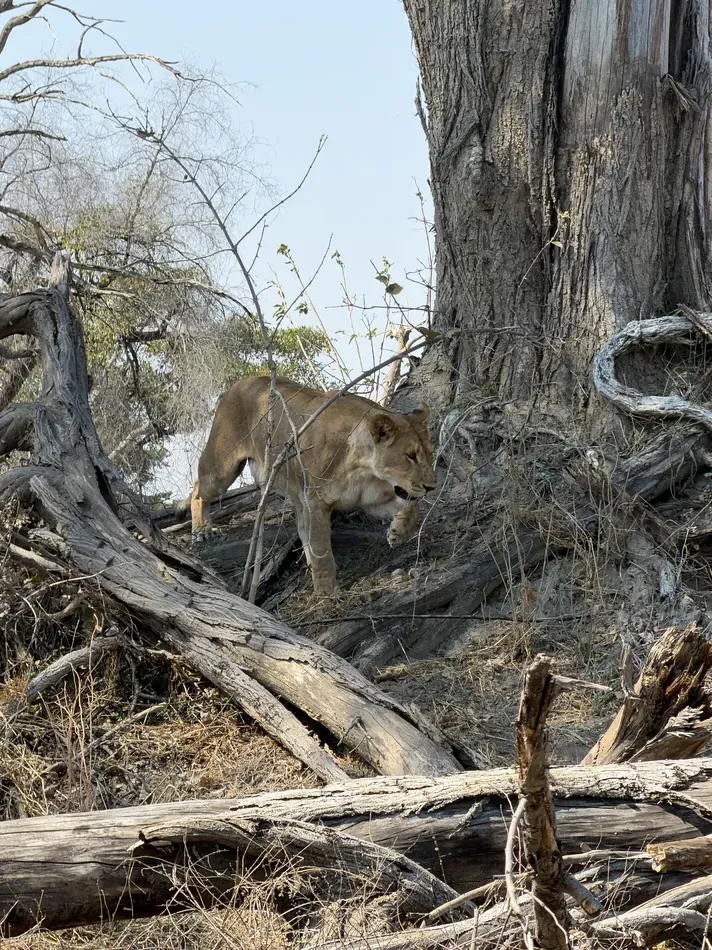

It was one of those wildlife sightings that was entirely about being in exactly the right place at exactly the right time. There no other vehicles around, we were all alone. We’d simply driven around a corner and there she was, and we didn’t have to share her with anyone!
We were very lucky, and although there are plenty of big predators in these parks, they’re often hard to find, so don’t go in expecting lions on demand. The appeal of these areas is precisely that they feel much wilder and less predictable than a heavily visited park.
How difficult are the roads in Bwabwata?
This is the bit I’d wanted someone to explain before we went.
Inside Mahango and Buffalo, many tracks are rough and sandy, and we were very glad to have a proper 4×4. We deliberately chose the gravel river route rather than the sandier western route in Mahango, which would probably have been alright in a 2WD, but we still encountered enough sand elsewhere that I was very pleased we had 4WD.
If you’re driving in deep sand, tyre pressure matters. Get advice from your vehicle-hire company about the appropriate pressure for your particular vehicle and tyres (they’ll probably tell you at handover), and make sure you know how to use the compressor and other equipment supplied with the car.
The remoteness of this park is part of what makes it so good, but it does mean it’s worth being a little more prepared. Carry plenty of water, have offline maps or a paper map, know how to use your 4×4 equipment and make sure you have a plan if you get stuck in sand or have a breakdown.
We had the Bwabwata booklet with us (see more on this below), which was particularly useful for understanding the tracks and routes, and for a list of emergency contact numbers.
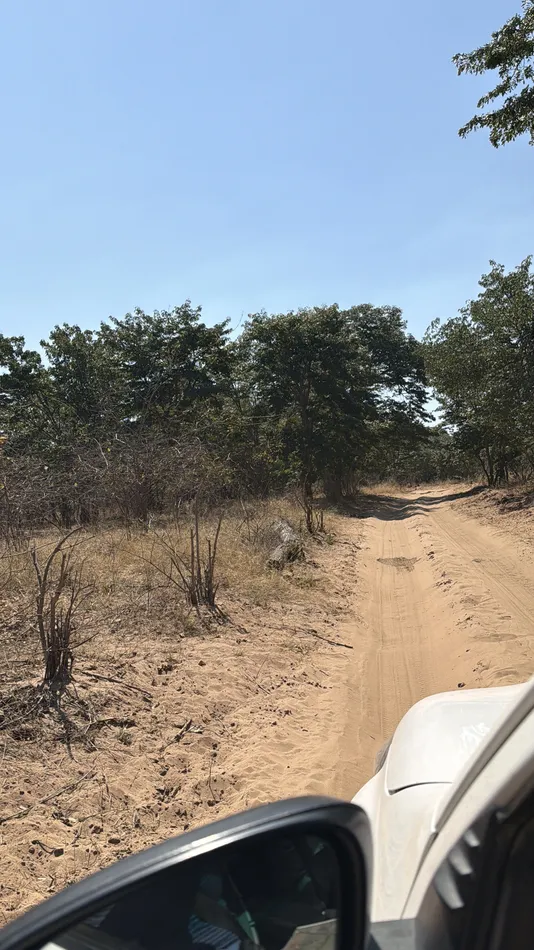
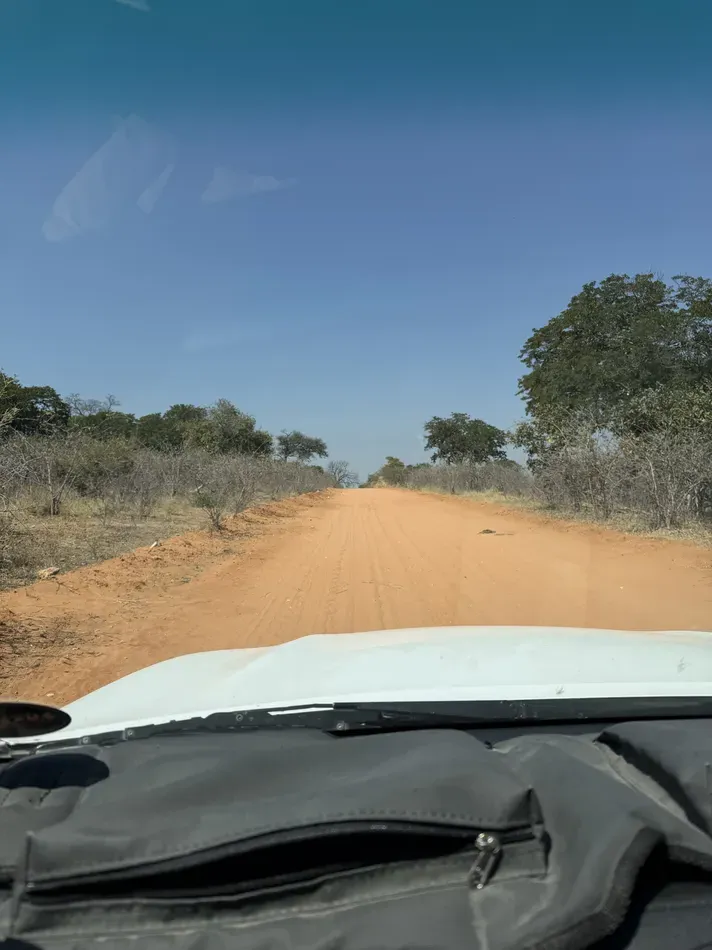
I’d also start reasonably early. Conditions can change, and this isn’t somewhere I’d want to be figuring out sandy tracks while simultaneously watching the clock. Wildlife sightings are better earlier on anyway!
None of that should put you off. We are not expert 4WD drivers (in fact at home we usually cycle or drive our very boring VW Passat on boring English roads)!
You don’t need to be nervous about self-driving here – just sensibly prepared. Once you are, having these beautiful wildlife areas almost to yourself is one of the best things about visiting Bwabwata.
The Bwabwata booklet we’d absolutely recommend buying
One of the most useful things we had was a Bwabwata National Park booklet that we bought locally.
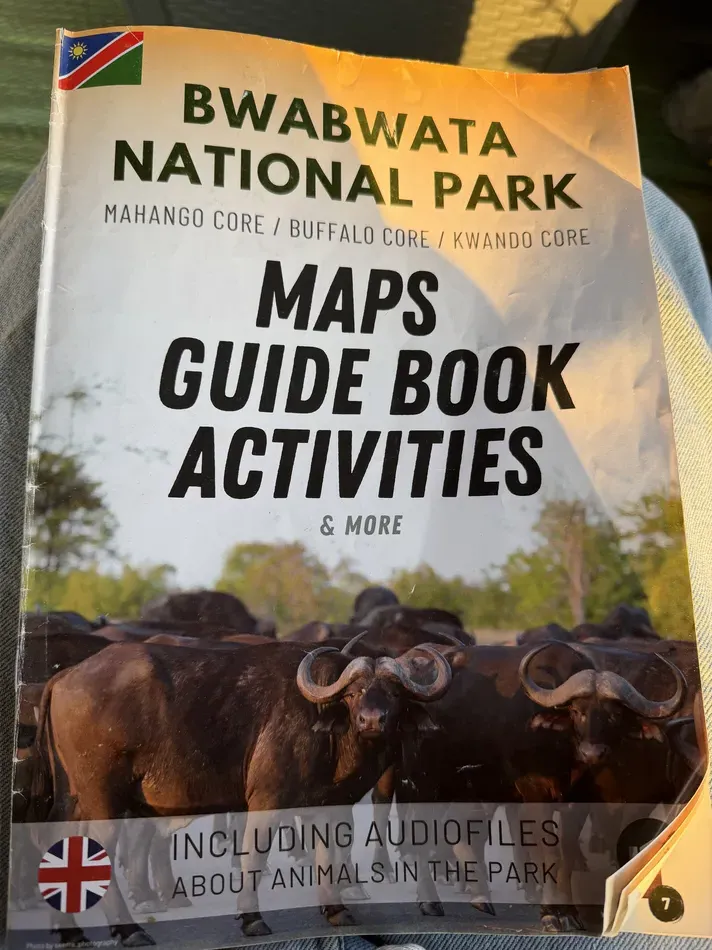
I’d found so little detailed information before travelling that having proper paper maps and information about the park once we were there made a huge difference, especially to our confidence levels!
The tracks can be rough and there are very few other tourists (or anyone!) around, so having something more concrete than Google Maps on satellite view was reassuring.
If you see the Bwabwata guide/booklet for sale locally, buy it before doing your game drives.
We found it for sale in most of the lodge receptions / tourist shops all along the strip.
Tracks4Africa in Bwabwata National Park
We also found the Tracks4Africa app very useful in these parks – it costs about £10 to download the relevant map, but it works offline which was handy, as signal was patchy.
It’s not a navigational app (you can’t ask it to make you a route from A to B), but it makes use of your devices’ GPS location to show where you are on the map, even without signal, and it showed a lot of the tracks within the park that definitely weren’t on google maps.
Where to stay near Mahango and Buffalo Core Areas
We drove Mahango and Buffalo en route between Mobola and Camp Kwando. Mobola is about a 40 minute drive to the Mahango entrance gate, and then from the Buffalo entrance gate to Camp Kwando, it’s about 2 hours 15 minutes.
We had roughly two hours in Mahango, a picnic lunch and another couple of hours in Buffalo before continuing east; so the journey took most of the day.
But if wildlife is a major priority, I’d seriously consider giving this part of Bwabwata more time (and in fact we wish we had had more time to spend here)!
If you want accommodation closer to the core areas, Emms Cubango Ecological Camp is near Divundu/Bagani, directly on the Kavango River, so it’s a useful almost-inside-the-park option for exploring Mahango and Buffalo Core Areas.
We didn’t stay here ourselves, so I can’t give you a personal review, but the location makes it worth considering if Bwabwata is a priority and you want more than the half-day we gave it.
One interesting new accommodation option is Buffalo Tented Camp, inside the Buffalo Core Area. It only opened in May 2026, so I didn’t know about it when we booked our trip, and I can’t give you a personal review.
It’s self-catering and, on paper, looks like a brilliant (if slightly pricey) option if you want to stay right inside the wildlife core area rather than fitting Buffalo Core into a travelling day.
The one Bwabwata core area we missed: Kwando
Bwabwata has a third core wildlife area further east: Kwando Core Area, beside the Kwando River. We didn’t have time to visit it; and this is probably the biggest thing I’d change about our time in the Zambezi Region.
By the time we reached this part of the park we were continuing towards Camp Kwando, and Kwando Core just didn’t make it into our itinerary. Having researched it more since, I wish we’d allowed another day for it.
Kwando has a reputation for particularly good predator viewing, including lions and African wild dogs, alongside elephants, buffalo and other wildlife. As with Mahango and Buffalo, sightings are never guaranteed, but if it’s as little visited as the other two core areas, it is definitely worth a try!
If I were planning our route again, I’d add another night around the Kwando area (probably at Camp Kwando, which was brilliant – see below – and about a 35 minute drive from the Kwando Core Area entrance gate) and use the extra day to self-drive Kwando Core.
Camp Kwando
After leaving the Buffalo core area, we continued east along the B8 to Kongola and then turned right down the C49 for Camp Kwando, where we stayed for two nights. This was absolutely our favourite accommodation in the Zambezi Region – and actually, the whole of our 3 week Namibia, Botswana and Victoria Falls itinerary!
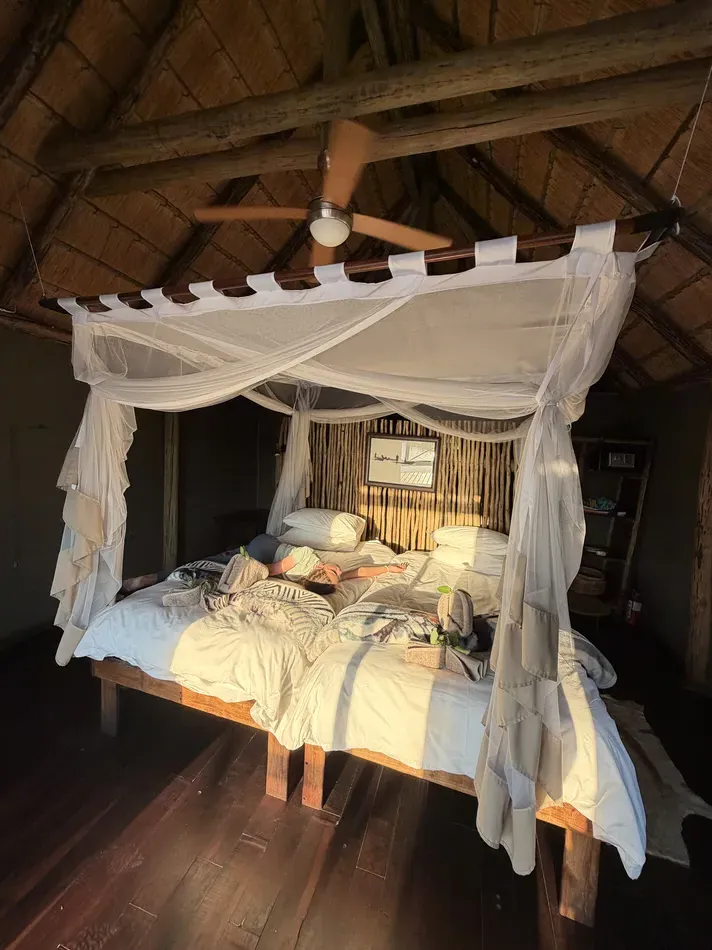
Camp Kwando sits on the banks of the Kwando River, with Botswana across the river, and the accommodation spread through the trees along the water. We stayed in two of the twin / double tented chalets, raised above the riverbank with a deck looking straight out onto the water.
The tent itself was beautiful and comfortable, with proper beds, a good en-suite bathroom and plenty of blankets and duvets, which was important because the mornings were freezing when we visited in August.


What really makes the place, though, is the staff. They were so friendly, welcoming and accommodating. Without exception everyone was so kind to us.
In the evenings before dinner we sat around a campfire, listening to the hippos grunting away nearby, and someone would bring a platter of popcorn to accompany our beer. It doesn’t get better!
There were monkeys around the grounds, hippos and crocs in the river and overnight we even heard lions roaring somewhere close by. It felt much wilder than a conventional lodge while still being extremely comfortable.
Every evening after dinner, we had to ask the barman whether it was safe to walk back to our chalet because Henry, one of the resident hippos, could be somewhere between us and our accommodation! Don’t worry though, if he is around, you get a security guard to escort you to your tent.
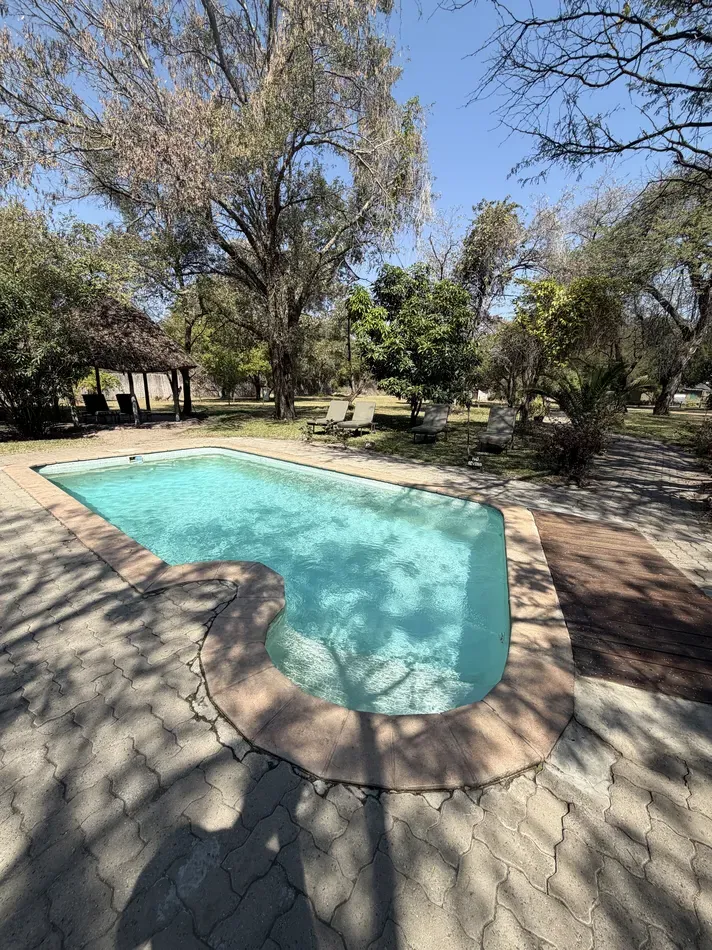
There’s also a little outdoor swimming pool, and once the day heated up, this was very appealing!
I’ll be honest that Camp Kwando was our most expensive stay in the Zambezi Region, and that is partly because we had to book two units for the four of us (there aren’t any larger family units). But, I still felt that it offered excellent value, and if you can stretch to it – do it, you won’t regret it!
Activities at Camp Kwando
Camp Kwando offers guided game drives and boat trips, but one thing I particularly liked was that the staff didn’t try to sell us an activity we didn’t need.
We’d originally booked a game drive, but after talking through our plans, the lodge suggested we self-drive nearby Mudumu National Park instead, because they thought we’d be perfectly capable of doing it ourselves. I thought that was excellent service – and they were right.
I’ll cover exactly how we self-drove Mudumu in the next section.
We did the afternoon / sunset boat cruise on the Kwando River, and this was my favourite river trip of the Zambezi Region.
There were plenty of hippos, but unlike my slightly nerve-racking experience at Mobola, here our guide clearly knew the individual groups and even knew which hippos had a reputation for being troublemakers, choosing his route accordingly. This made me feel much happier!

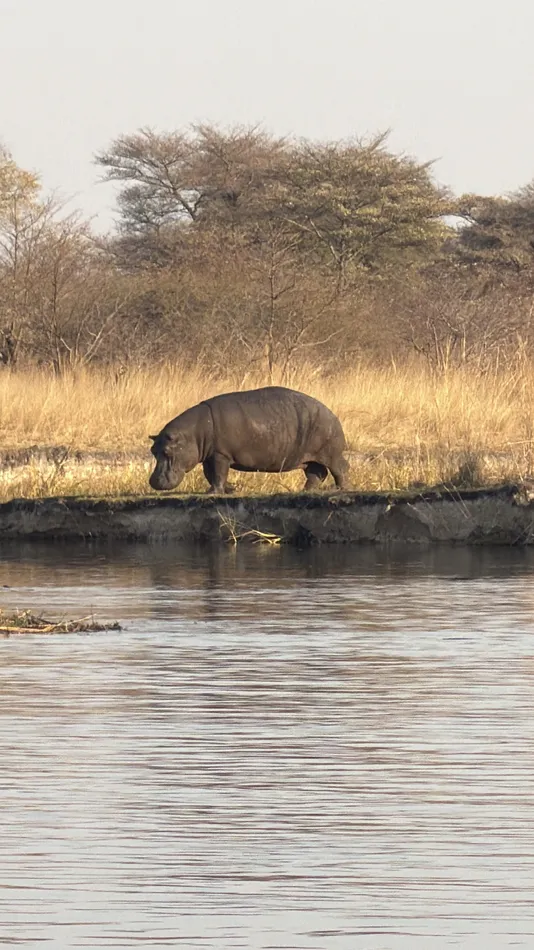
We saw hippos, crocodiles, a water monitor, an African fish eagle and loads of beautiful bird life, and the trip finished with sunset on the river with a sundowner (drink).
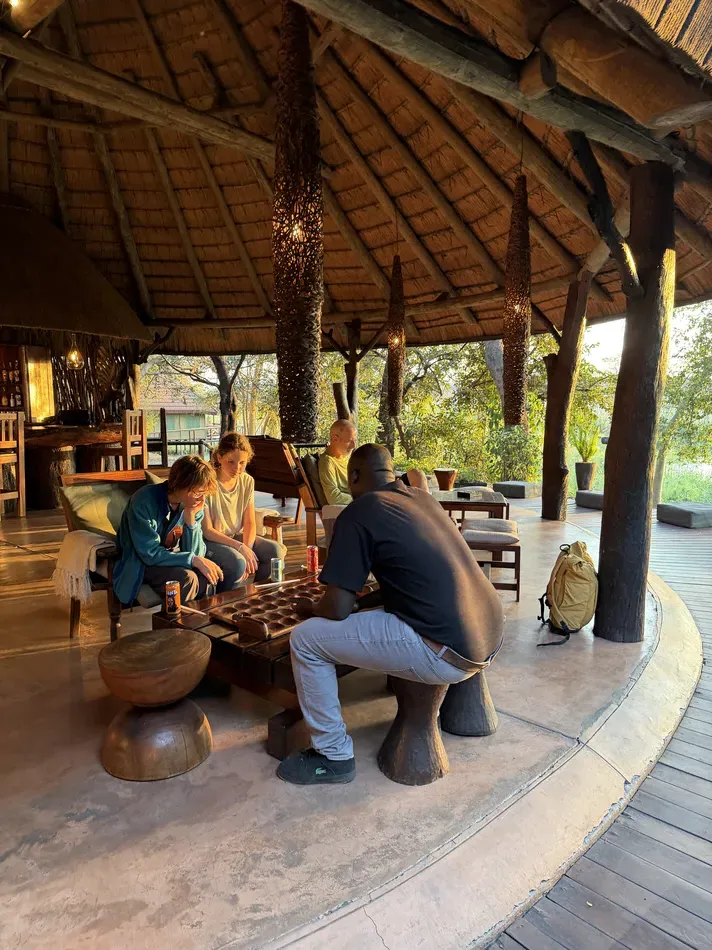
Back at camp, there were drinks and popcorn around the campfire before dinner. Our kids also ended up learning a traditional board game in the lapa (the traditional outdoor shelter with a thatched roof), taught by a staff member, which was so lovely.
Eating at Camp Kwando
Unlike Hakusembe and Mobola, there was no self-catering at Camp Kwando. We ate at the lodge, and the food was excellent; easily the best we had during our whole trip.
Meals are served in the main lapa overlooking the river. Dinner is an excellent three course set menu (but with lots of very generous flexibility for dislikes, intolerances etc), and should be booked in advance. At the time of writing, it costs N$525 per person. Let the lodge know about any dietary requirements when you book.
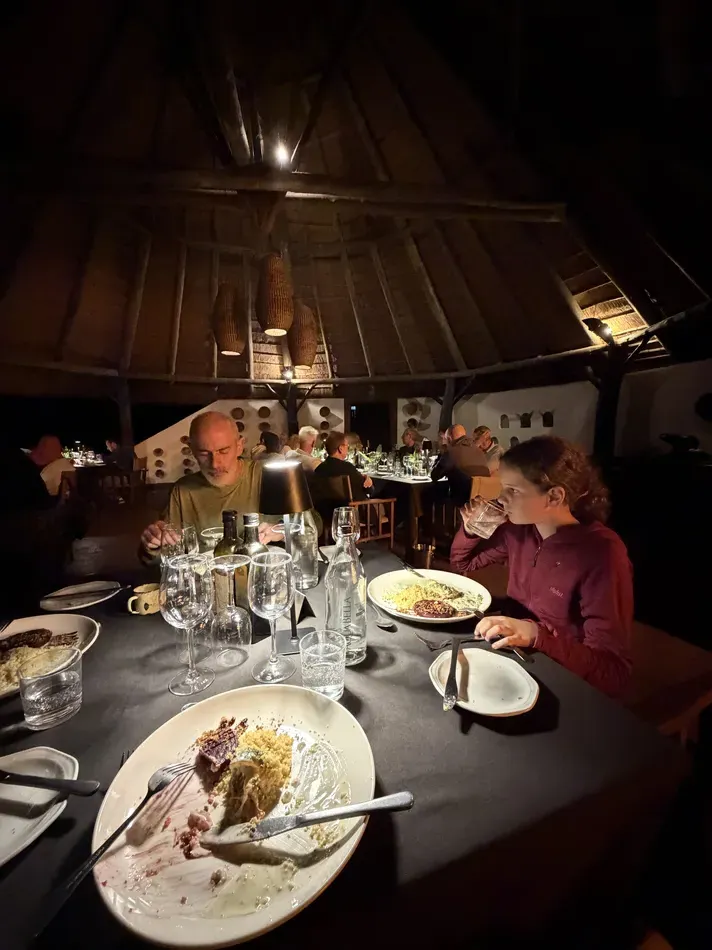
Breakfast was included in our stay, and there was a continental buffet plus small menu offering delicious egg dishes, pancakes, French toast etc. Budget roughly N$170 per person for lunch, depending on what you order – again there was a small lunch menu offering a good selection of food. Lunch doesn’t need to be pre-booked.
One thing I would change: Stay longer at Camp Kwando
Two nights gave us time to self drive Mudumu National Park, do a river cruise and spend some time at the lodge, but this is one place where I’d stay for three nights if I had my time again.
That extra day would have allowed us to self-drive Kwando Core Area in Bwabwata, which we’d skipped, without sacrificing the time we spent in Mudumu.
For a Caprivi Strip itinerary focused on wildlife rather than simply getting from Namibia to Botswana, three nights at Camp Kwando would be my choice.
Camping at Camp Kwando
If you’re camping, you can’t camp at Camp Kwando lodge itself, but they do have a separate Bush Camp by Camp Kwando near Kongola. It’s around 35 km from the lodge much closer to the Kwando Core Area, so don’t book it expecting to pop over and use the lodge facilities – it’s very much its own place.
There are just four private campsites, each with its own ablutions, hot showers, braai area and electricity during generator hours. There’s also a small pool and sundowner deck overlooking the Kwando River.
We haven’t stayed here ourselves, but it looks like a great option for campers – and if the service is anything like we experienced at Camp Kwando, I’d certainly consider it.
Bookings/enquiries: Reservations@campkwando.com
Mudumu National Park
One of the big advantages of staying at Camp Kwando is that Mudumu National Park is only around 20 minutes away, making it very easy to visit independently.
As I mentioned above, we’d originally considered a guided game drive from Camp Kwando, but the lodge suggested we self-drive Mudumu instead. After driving Etosha, Mahango and Buffalo ourselves, we were perfectly comfortable doing that, and Mudumu was another example of why we loved wildlife viewing in the Zambezi Region so much.
Mudumu packs in an impressive amount of wildlife for such a little-visited park. Elephants, buffalo, hippos, crocodiles, zebra and sable are all found here, alongside predators including lion, leopard, cheetah, spotted hyena and African wild dog. It’s also excellent for birdlife, with more than 430 species recorded, including African fish eagle and African skimmer.
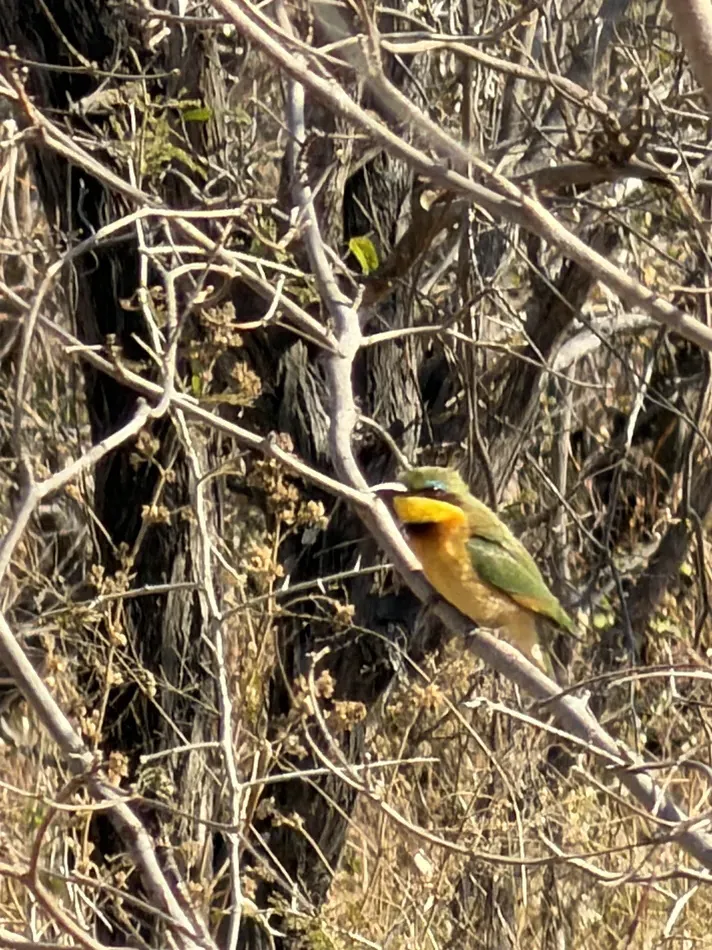
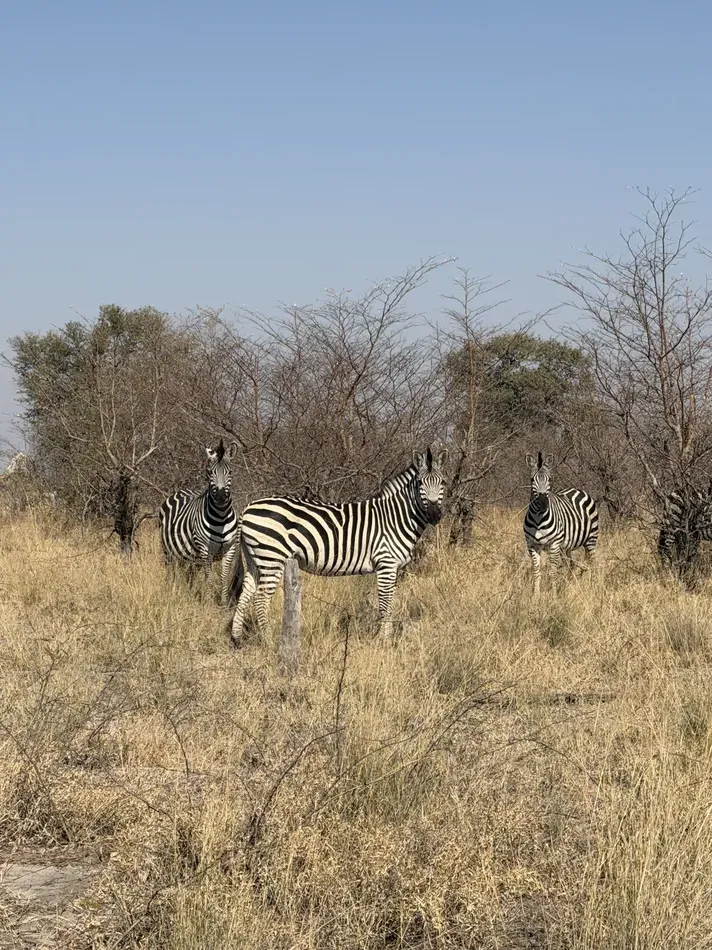
During our morning in the park, we stuck to the more open western side of the park, between the C49 road and the river, and saw only two other vehicles. One of them had been camping inside Mudumu and stopped to tell us they’d seen two male lions. They pointed us in the right direction and, remarkably, we eventually found them too, although they were a long way away underneath a tree.
We also saw zebra, hippos and plenty of birds, and once again it was fantastic to drive around a national park full of amazing animals, with virtually nobody else there.
Self-driving Mudumu National Park
Mudumu, like the core areas in Bwabwata, feels much less structured than Etosha. Don’t expect a huge network of signposted tourist roads (in fact don’t expect signposts at all)! But again, we really liked it.
Take the same approach as I suggested for the Bwabwata core areas: go in with fuel, water, offline maps and a proper 4×4, and don’t rely on meeting another vehicle if you have a problem. Depending on the season, tracks can be sandy and conditions can change.
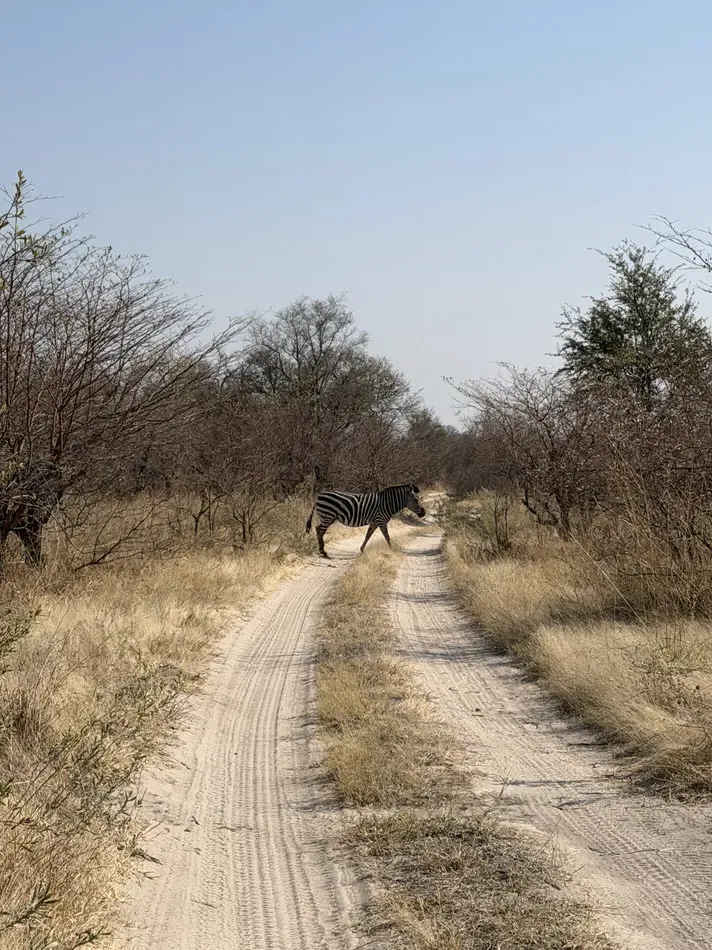
Again, that isn’t a reason to be nervous about visiting. With some basic preparation, the lack of other visitors is one of Mudumu’s biggest attractions.
Tracks4Africa in Mudumu National Park
We found the Tracks4Africa app very useful in Mudumu, especially since we didn’t have a paper map for this one!
It’s not a navigational app (you can’t ask it to make you a route from A to B), but it makes use of your devices’ GPS location to show where you are on the map, even without signal, and it showed us the tracks within the park so we could choose a route (and these tracks definitely aren’t on google maps)!
Entry permits for Mudumu National Park
We sorted our entry permits at the park entrance, just like in Bwabwata. In the same way, expect the process to be fairly functional rather than a visitor-centre experience: arrive at the entrance, sort out the permit and then head into the park. We were given some directions too, but they weren’t all that helpful! Tracks4Africa was our best navigational tool here!
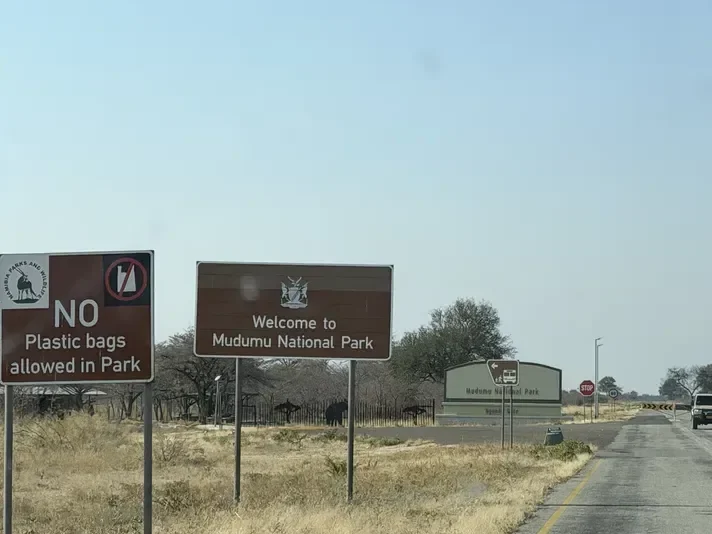
When we visited, the fees for international visitors were:
- Adults: N$200 per person
- Children aged 9–16: N$150 per child
- Vehicle with 10 seats or fewer: N$60
So, the same as entering Bwabwata; which was N$760 (around £35) for the four of us including our vehicle. As mentioned before, entry fees are lower for Namibian citizens and visitors from SADC (Southern African Development Community) countries.
If you’re visiting independently, keep your permit or receipt with you in the vehicle.
How long do you need in Mudumu?
We visited for a morning from Camp Kwando (only a 20 minute drive from the entrance gate), and that worked well for us. It left us enough time to return to the lodge, spend some time there enjoying the pool and then take our afternoon boat cruise on the Kwando River.
If you had time, you could easily give Mudumu longer. There are also campsites inside the park (unfenced and very wild), which would give you a completely different experience from our day visit.
Driving the Zambezi Region / Caprivi Strip: do you need a 4×4?
The main road through the Zambezi Region / Caprivi Strip is very easy to drive (especially compared to some of the gravel roads in the rest of the country)! The B8 is tarred, generally good and, for long stretches, very straight.
But I still wouldn’t choose a normal small hire car for this itinerary.
Even getting to some of our accommodation a short distance off the main B8 road involved sandy, rough access roads. We didn’t generally need to engage 4WD for these, but we were very glad to be in a Toyota Hilux with high ground clearance and chunky tyres rather than something with smaller tyres and limited clearance.
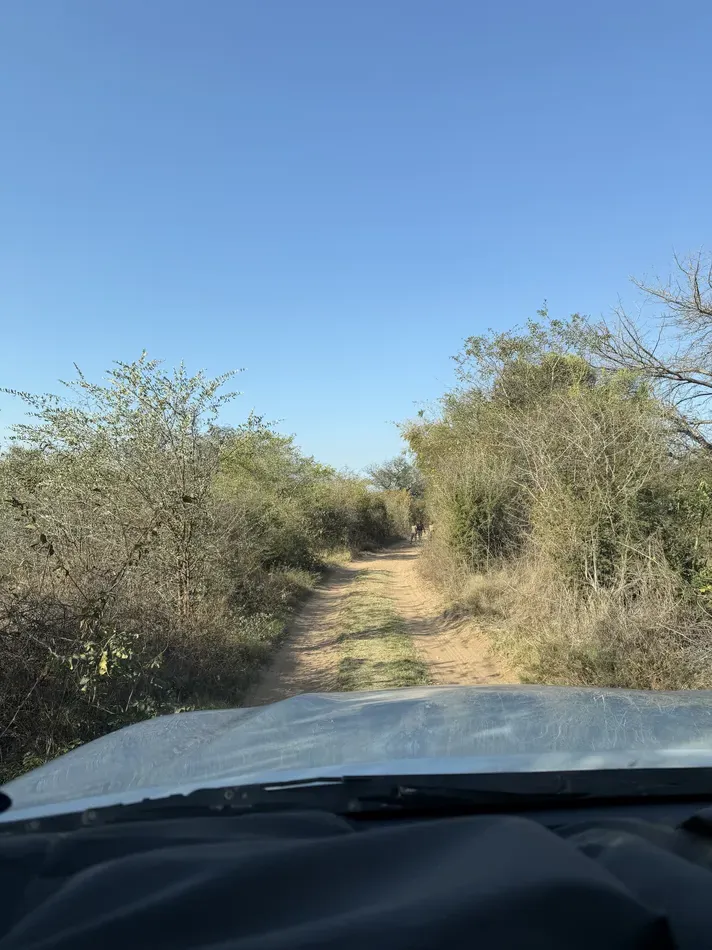
Once you start self-driving the national parks, a proper 4×4 becomes much more important. Mahango, Buffalo and Mudumu all have rough or sandy tracks, and for all these parks we engaged the 4WD, and were very glad we did. For the route we did, I’d hire a 4×4 again without hesitation.
Deep sand also means knowing how to use the vehicle properly. Before setting off, ask your hire company what tyre pressures they recommend for what road types your particular vehicle and tyres, and make sure you know how to use the compressor and recovery equipment provided in your vehicle.
I’d also have in the car plenty of drinking water, offline maps, a paper map where possible and enough fuel. Fuel is available in all of the larger towns along the B8, but best to plan ahead because the distances are substantial.
My main piece of advice, now that we’ve driven this region though, is – don’t let the more remote park tracks put you off. Be prepared rather than worried. Having so few other vehicles around was one of our favourite things about self-driving this part of Namibia.
From Camp Kwando to Chobe via Ngoma Gate
After leaving Camp Kwando, we drove east via Katima Mulilo and crossed into Botswana at the Ngoma Gate border post, before continuing on to Mwandi View for our Chobe stay.
It was a straightforward route and a great way to link the Zambezi Region with Chobe National Park; where the wildlife went up another notch, including yet more lions.
You can see how this fitted into our full Namibia, Botswana and Victoria Falls itinerary here.
How many days do you need in the Zambezi Region / Caprivi Strip?
I’d allow at least five or six days for the Zambezi Region / Caprivi Strip if you’re driving all the way from Rundu towards Botswana. You can cross it much faster, but you’d miss lots of the best bits and spend A LOT of time in the car.
We spent five nights travelling through the region:
- 1 night at Hakusembe River Lodge Camping2 Go near Rundu
- 2 nights at Mobola Island Lodge near Divundu
- 2 nights at Camp Kwando near Kongola
That gave us time for the Living Museum, Mobola’s island walk and boat cruise, self-drives through Mahango and Buffalo Core Areas, Mudumu National Park and a boat trip on the Kwando River.
If I were planning the same Caprivi Strip road trip again, I’d add one extra night at Camp Kwando, making it six nights in total. We’d use that additional day to self-drive Kwando Core Area, the one part of Bwabwata we missed.
You could also easily add another night around Mahango and Buffalo if wildlife is a particular priority, perhaps staying at Emms Cubango Ecological Camp or Buffalo Tented Camp rather than visiting both areas as part of a travelling day.
So my rough guide would be five nights minimum, six nights ideal, and seven if you want to take the national parks slowly.
I wouldn’t try to cram every park and lodge into three or four days – it just wouldn’t be manageable or fun.
If you want to see how this fitted into our full 3 week trip, have a read of my Namibia, Botswana and Victoria Falls self drive itinerary – 3 weeks with kids blog post.
The Zambezi Region / Caprivi Strip with kids
We travelled through the Zambezi Region with our kids when they were 12 and 14, and I wouldn’t change the route because we were travelling as a family. You shouldn’t choose a separate “Caprivi Strip with kids” itinerary; the wildlife, river trips and adventurous accommodation are just as much fun for them as they are for adults.
In fact, this was a particularly good part of the trip for older kids. We weren’t spending entire days driving between sights: we could self-drive a national park in the morning, swim at the lodge in the afternoon and head out on the river before sunset.
At Camp Kwando, our kids ended up learning a traditional game with the staff in the lapa; at Mobola we crossed the suspension bridge by head torch and watched hippos from the island. None of it was manufactured as a “family activity”.
With younger children, I’d keep the same route but probably travel more slowly. Adding an extra night gives you room for swimming and downtime rather than trying to fit a game drive and boat trip into every available day.
There are also some obvious practical considerations around wildlife. Follow lodge instructions about walking around after dark, keep children close beside rivers and listen to guides around hippos and crocodiles.
For us, the Zambezi Region was one of the highlights of travelling through Namibia with kids. You don’t need to simplify it for kids; just take them along for the adventure.
Would we visit the Zambezi Region / Caprivi Strip again?
Absolutely. In fact, the Zambezi Region is one of the parts of this trip I’d most like to return to.
I loved the combination of excellent wildlife, very few other tourists, beautiful river landscapes – very different from the rest of the country – and genuinely lovely places to stay. It felt adventurous without being difficult for the sake of it, and the accommodation was remarkably good value.
If we returned, I’d actually build a future trip around Botswana and the Zambezi Region together. I’d start in Maun, spend time around the Okavango panhandle, travel north into Namibia near Mahango, then follow the Zambezi Region east – revisiting Mobola and Camp Kwando and finally driving the Kwando Core Area we missed.
From there, I’d cross back into Botswana and make a loop through Chobe and Moremi before returning to Maun.
That’s a trip for another day. Although I’ve already mentally planned rather a lot of it!
For our first family trip, though, continuing east through the Zambezi Region towards Botswana worked brilliantly. You can see how this section fits into the complete journey in our 3-week Namibia, Botswana and Victoria Falls self-drive itinerary.
And if you’re wondering how four of us managed the whole thing with hand luggage, our Namibia Botswana packing list post has everything we took – and a few things we discovered we didn’t need!
