


Packing for Namibia and Botswana in July and August feels slightly counterintuitive if you’re coming from Europe!
You’re going to Africa, which sounds like it should be hot, but down there it’s winter, so you actually need a down jacket, warm layers and a beanie (along with some nice warm weather clothes as well).
On our 3 week trip from Windhoek to Victoria Falls, we actually escaped the heatwave-riddled European summer by heading to Africa – where we got perfect mid twenties Celsius temperatures – at least during the day.
The nights and early mornings were much chillier, but we were prepared for that – and this post will help you to make sure you are too!
We travelled for three weeks through Namibia, Botswana and Zimbabwe as a family of four, with kids aged 12 and 14, and all of us travelled hand luggage only.
I’m a big fan of minimalist packing anyway: fewer clothes means fewer decisions, and carrying one manageable bag makes a huge difference when you’re moving accommodation regularly rather than lugging an enormous suitcase from room to car and back again.
On this trip there was another bonus too: because we booked our London to Johannesburg and Windhoek / Vic Falls to Johannesburg flights separately, travelling without hold luggage meant we could stay airside in Johannesburg – rather than going through immigration, collecting and rechecking bags and heading back through security and border control – saving us time, stress and hassle.
We essentially packed a week’s worth of clothes, did laundry twice and used almost everything we took.
This Namibia + Botswana packing list is based entirely on what actually came with us on that trip, including what worked particularly well, what we didn’t use and the things I’d definitely pack again.
The main lesson? Layers a far more important than an entire beige safari wardrobe!!
Disclaimer: This post contains affiliate links. As an Amazon Associate I earn from qualifying purchases. Should you click on a link to purchase, it is at no extra cost to you, but I may receive a small commission, which helps to support this blog (THANK YOU)! See my privacy policy for more information. This post was written (and rewritten!) by Bea – always honest and always based on real-life experience.
Namibia and Botswana packing list: the quick checklist
If you’re interested, you can see our full route in my 3 week Namibia, Botswana and Victoria Falls self-drive itinerary blog post.
This is roughly what we packed per person for three weeks in July and August. With a couple of laundry stops it was plenty!
Clothing
You really don’t need three weeks’ worth of clothes. We’ll get into the laundry logistics and exactly what I wore below.
Safari and everyday essentials
Electronics and entertainment
You don’t need loads of entertainment. There is quite a lot to do and look at on safari!
Documents and money
Entry requirements can change (what documentation, payment, vaccinations etc they require), so don’t rely on this packing list for the latest rules. Check the official Namibia entry requirements, Botswana entry requirements, and, if you’re adding Victoria Falls as we did, Zimbabwe entry requirements before travelling.
We’ve covered a bit more about currencies as well as visas and border crossings in our 3 week Namibia, Botswana and Victoria Falls self-drive itinerary post.
Bags
The kids wore their Osprey Ace 50 backpacks, which are aimed at kids aged 10 – 17 and are big enough for their kit without being enormous.
They also fit in plane overhead lockers, as long as they’re not packed too full. They probably used more like 35 – 40 litres of the full 50 litre capacity.

Us adults used cabin baggage specific packs we’ve had for years – but if I was to buy a new one, I’m currently coveting the Osprey Fairview women’s 40l carry-on travel bag. There’s a men’s version (the Farpoint) too.
Each of us also had a smaller bag for under seat on the plane and for keeping things such as water, binoculars and Kindles handy in the car.
Whenever we left the car, we didn’t want to leave obvious valuables sitting inside, so everyone could quickly scoop up their Kindles, phones, cameras and anything else valuable and take them along with them.
What to wear in Namibia and Botswana in July and August
Packing clothes for a safari in July and August is mostly about layers. During the day we were often in T-shirts and shorts, but early mornings and evenings were a completely different story. An open safari vehicle before sunrise can be absolutely freezing.
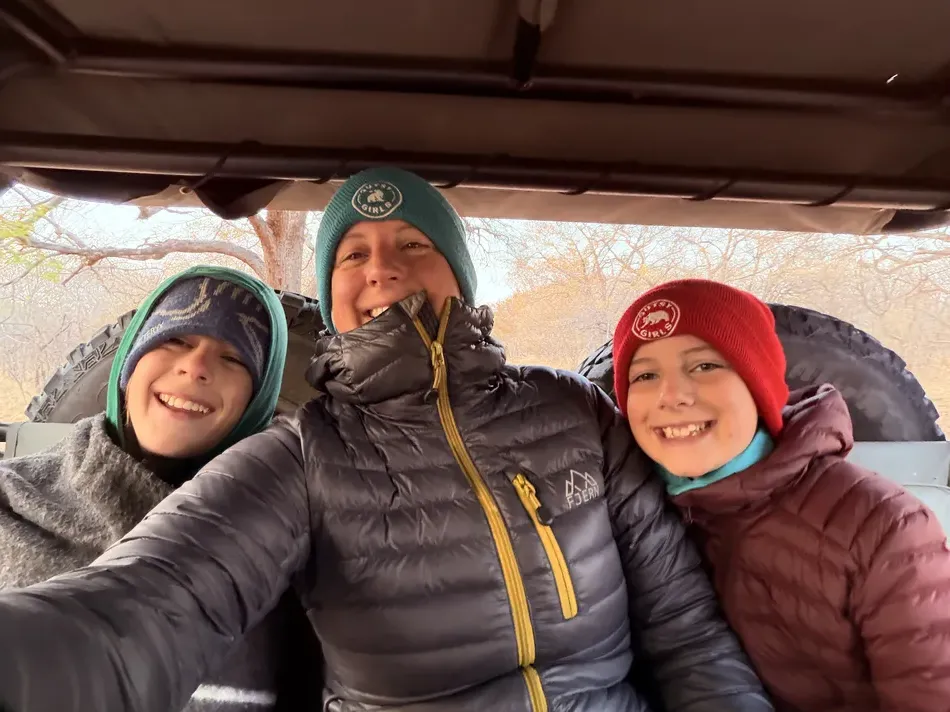
You don’t need to buy a special safari wardrobe either. I just wore the same sort of comfortable clothes I’d wear at home for walking and travelling – just chosen so I could add and remove layers easily.
Layers were the answer
My basic cold-weather combination was a T-shirt, long-sleeved thin merino top, a knitted merino jumper (or a fleece), with a down jacket over the top. I also packed a beanie and Buff, both of which earned their luggage space on early starts.
The merino jumper was particularly useful because it was warm without being bulky. As the day heated up, I could gradually strip the layers off.
And don’t underestimate how cold an early game drive can be. Our night safari in Etosha National Park and the morning safari in Chobe National Park were particularly chilly. Sitting still in a moving open vehicle before the sun has properly come up (or after it has gone down) is very different from walking around in the same temperature!
What I wore on my bottom half
Possibly my most unexpectedly perfect trousers were a pair of ankle grazing baggy jeans with a drawstring waist. The drawstring waist meant they were comfy for travelling, and they were cropped around the ankles and loose enough to be airy and pair with sandals when it was warm, but the denim was substantial enough to give me some warmth when it wasn’t, and I could then pair them with warm socks and shoes.
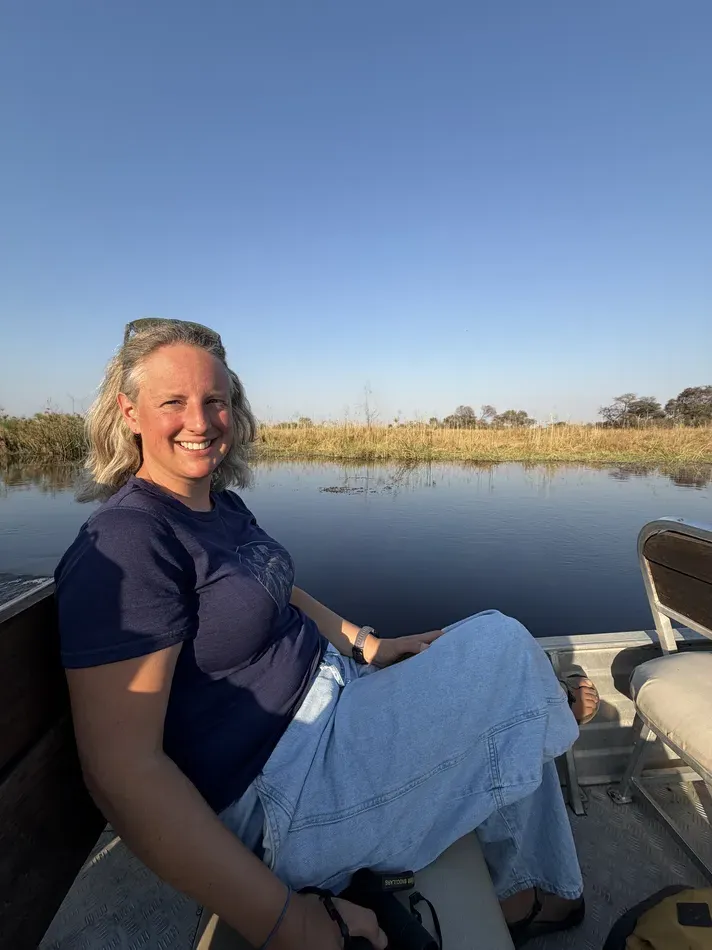
I wore shorts quite a bit too, and leggings occasionally. That was basically it.
You definitely don’t need to rush out and buy special khaki safari trousers. Comfortable trousers, shorts and leggings that you already like wearing are fine.
Do you need a waterproof jacket?
We packed lightweight waterproofs and didn’t use them at all during our trip to Namibia, Botswana and Victoria Falls.
I’d probably still take one in July and August, though. A lightweight waterproof takes up very little room and can double as a windproof outer layer if necessary. And if your trip includes Victoria Falls, as ours did, getting wet (when visiting the falls!) becomes rather more likely – although because we opted for a guided tour, we actually got ponchos provided, which I hadn’t expected.

You can read about that part of the trip in the Victoria Falls section of our Namibia, Botswana and Victoria Falls itinerary.
How we packed for three weeks with hand luggage only
The trick to travelling for three weeks with hand luggage is essentially packing for a week and doing laundry along the way.
For each person, that meant roughly seven pairs of underwear, four tops and three bottoms, plus the warmer layers we’d need for early mornings and evenings. That was plenty.
Doing laundry along the way
We did a proper load of washing twice during the trip (about once a week). Our apartment in Swakopmund had a washing machine, so we did it ourselves there. Later, at Mobola Island Lodge, we handed a big load over to the staff and it came back clean and folded for a modest fee!
Laundry was available at lots of the smaller lodges and campsites we stayed in, so you could easily do it more often if needed. I wouldn’t have chosen to do laundry at the enormous, busy camps in Etosha like Okaukuejo though, as I can imagine things getting lost and taking longer than expected there. A smaller lodge / campsite where you’ve got a two-night stay is a much easier bet.
You can see all the places we stayed, and how long we spent at each, in our 3 week Namibia, Botswana and Victoria Falls self-drive itinerary post.
The safari things we were really glad we’d packed
A few things earned their space in our bags many times over.
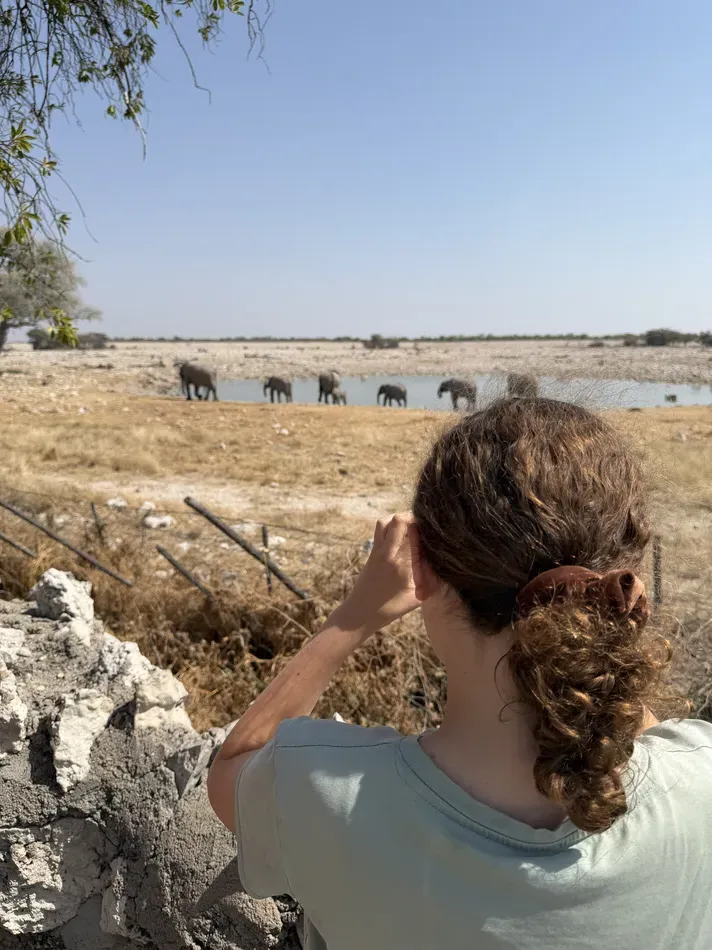
Binoculars – one pair each
We took four pairs of binoculars: one each, and I’d absolutely do that again. We already owned a couple of pairs, and these were the ones we bought for the kids.
Wildlife doesn’t tend to hang around politely while you all pass one pair of binoculars from person to person! Having our own meant everyone could watch what was happening at the same time, whether we were on a game drive or spotting something from the car.
A southern Africa wildlife guide
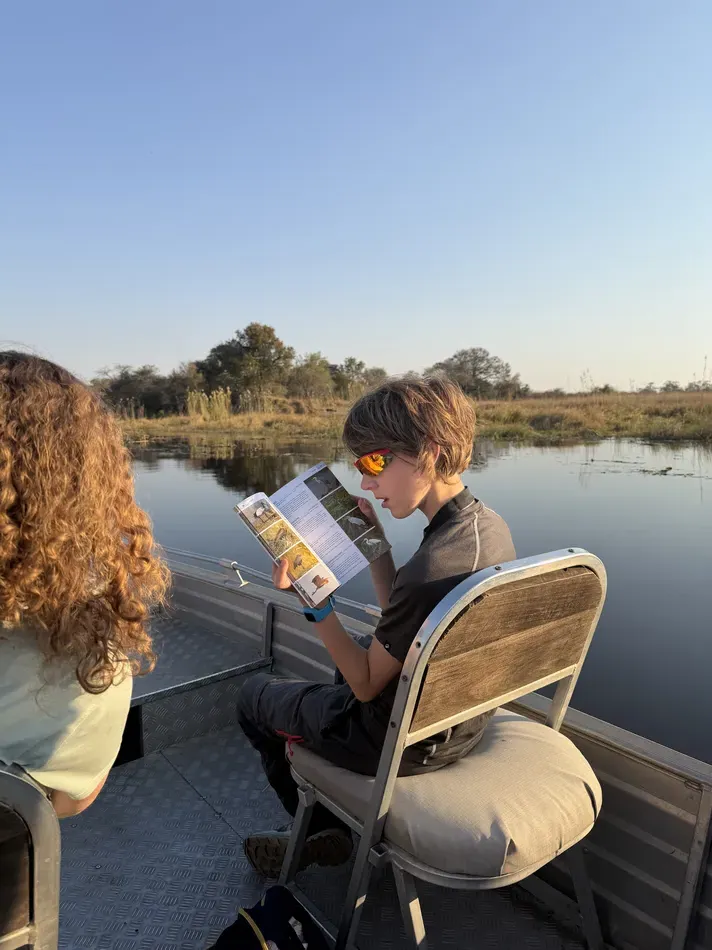
We also used this Southern Africa wildlife guide book regularly for identifying what we’d seen. We actually bought this one in a bookshop in Swakopmund, but it’s worth getting in advance if you can! It was not too big, but very informative. Multiple guides commented on what a good book it was!
It was particularly useful when we were self-driving because there wasn’t always a guide sitting next to us to identify everything. It also gave the kids something to look through when we’d spotted an animal or bird we didn’t recognise.
Safari journals for the kids
My 12 year old had a Zwela safari journal.
This gave her somewhere to record the animals she’d seen as we travelled, make notes on what we’d done each day, and read through all the safari tips and tricks in the journal. Lovely illustrations and prompts too. I do recommend getting this for kids 12 and under!
Torches
Take a torch or headtorch (this is my favourite that me and both kids have). It gets properly dark. As in see the Milky Way dark!!
At several lodges we needed to walk outside between our bungalow or safari tent and the bar or restaurant after dark. A phone torch will technically do the job, but having a proper torch was much better – particularly somewhere like Camp Kwando, where wandering around after dark also involved wondering whether Henry the hippo was visiting that night!
Power banks
Power banks were another thing we genuinely needed. Not every safari tent had a plug socket near the bed, or even electricity, so we couldn’t assume we’d be able to plug phones, Kindles and cameras in every night. This is my favourite power bank.
We took several charged power banks between us and that was enough. We also packed a solar charger and never used it, so I’d leave that at home next time.
A few small things we were glad we’d packed
These aren’t exciting enough to make most safari packing lists, but they were useful.
A bar of hand soap
This is a tiny one, but pack some soap. There wasn’t always (barely ever!) hand soap provided in our accommodation, so I kept a small bar in my wash bag. It takes up virtually no space.
Swimming stuff
We took swimming costumes and used them a lot. Plenty of the places we stayed had pools, although in July and August the water was quite chilly (not chilly enough to put the kids off though!).

Something to do in the evenings
Kindles, headphones and a couple of small games were enough for us. We took playing cards and Yahtzee, plus my daughter had her safari journal.
Reusable water bottles
We each had a reusable water bottle for driving days and activities.
We also packed a water filter, but never had to use it – which brings us neatly onto the things that could have stayed at home.
What we packed but didn’t need
We actually used almost all of what we took. There were, however, a few things that travelled around southern Africa for three weeks without seeing the light of day…
- Water filter: never used it.
- Dry bags: never used them (I thought they’d be useful for Victoria Falls, but the ponchos we were lent covered our day packs, so they stayed dry)
- Solar charger: never used it. Our power banks were plenty (and we could recharge these regularly)
- Waterproof jackets: never actually wore them, although I’d probably still pack a lightweight one. They’re useful as a windproof layer and potentially handy at Victoria Falls.
What you don’t need for a Namibia and Botswana safari
You don’t need to buy an entirely new wardrobe or fill your bag with khaki coloured clothes.
We managed three weeks with normal clothes we already owned, a sensible layering system and a small amount of kit. In particular, I wouldn’t bother with:
- Three weeks’ worth of clothes – instead pack for a week and do laundry.
- Lots of shoes – a pair of approach trainers plus sandals or flip-flops were plenty
- A purpose-bought safari wardrobe – comfortable, practical clothes are fine.
- Loads of kids’ entertainment – Kindles, journals and a couple of games did the job.
- Camping equipment if, like us, you’re staying in lodges and safari tents (or even if you choose to camp, the 4×4 camping equipped vehicles for rent include almost everything you’ll need!)
If you’re still deciding between camping and lodges, I’ve explained why we chose lodges rather than a rooftop-tent setup in our accommodation versus camping discussion in my Namibia, Botswana and Victoria Falls self-drive itinerary post.
A few things to download before you leave home
Do a bit of downloading while you still have reliable Wi-Fi. Mobile data was generally useable on our trip, but there were plenty of stretches where we had little or no signal.
The main things I’d sort before leaving are:
- Offline Google Maps for the areas you’ll be driving through. We also paid for and downloaded the Tracks4Africa maps, which were a good addition to Google maps but I wouldn’t say they were vital.
- Music, podcasts and audiobooks for long driving days (Lion King playlist, anyone?)
- Kindle books.
- Accommodation and flight confirmations etc saved somewhere you can access offline.
- Digital copies of important travel documents.
We downloaded the Namibia map before leaving the UK, which meant navigation wasn’t dependent on having mobile data. Particularly on long, empty roads, that’s one less thing to worry about.
We used local MTC SIM cards in Namibia, and I’ve covered what we paid and where we bought them in the SIM cards/mobile data section in my main Namibia, Botswana and Victoria Falls self-drive itinerary post.
Ready to pack?
That’s it. Three weeks, four people, hand luggage only. You don’t need loads, just enough clothes for those chilly mornings and evenings, and some summer clothes for the heat of the day.
Just remember that in a Southern African winter, there’s probably a 20 degree difference between the temperature in the very early morning and the temperature in the heat of the afternoon in some locations!
If you’re planning a similar trip, my 3 week Namibia, Botswana and Victoria Falls self-drive itinerary covers our complete route, where we stayed, what it cost and everything we learned along the way.
