


Packing for a ski holiday isn’t quite the same as throwing a few T-shirts and swimsuits into a suitcase for a summer holiday. Between bulky jackets, endless base layers, and the mystery of how small children generate so much laundry, it can feel like a logistical puzzle even before you leave the house.
After more than twenty-five years skiing in Les Arcs, and packing for my own family every winter since my son was four (and my daughter was still in nappies), I’ve learned a few things about what you actually need, and what can stay at home.
This post covers a complete family ski trip packing list for both adults and kids. It’s designed for UK families travelling by train, plane, or car; whether you’re heading to the Alps for the first time or fine-tuning your setup for the tenth.
You’ll find straightforward recommendations for good value ski clothing and gear (including where to hire or buy it affordably), plus a few small tips that make a big difference, like how to keep everyone warm without overpacking, and what to pack if your accommodation has no washing machine.
Disclaimer: This post contains affiliate links. As an Amazon Associate I earn from qualifying purchases. Should you click on a link to purchase, it is at no extra cost to you, but I may receive a small commission, which helps to support this blog (THANK YOU)! See my privacy policy for more information. This post was written (and rewritten!) by Bea – always honest and always based on real-life experience.
🎒 Quick buy essentials
For when you just want to get the shopping done, here are the family ski trip basics I use and recommend:
🧥 Decathlon ski jackets & salopettes – good value, waterproof, and family-proof.
🧤 Mountain Warehouse merino thermals – warm, soft, and affordable.
🧣 Decathlon fleece buffs & goggles – easy spares that actually last.
🎿 Adventure Kit Hire clothing rental – hire kids’ and adults’ ski kit for the week, or shop pre-loved.
⛷️ SkiSet rental – pre-book your ski hire online for quick collection in resort.
🧳 Osprey ski backpack – doubles as travel carry-on and slope daypack. If you’re skiing with small kids, I recommend a capacity of around 30 litres.
🎒 Compression packing cubes – keep everyone’s gear organised, efficiently packed, and easy to grab.
💡 Jump to the full family packing list – what’s worth packing, what’s not, and how to fit it all in.
🚆 How to pack for your journey
Whether you’re driving, flying, or taking the train to the Alps, how you travel changes what (and how much) you can pack. A few small choices before you leave make life much easier once you’re actually on the move.
If you’re taking the train:
Whether you’re on the Eurostar ski train via Lille or changing in Paris, you’ll need to unload and reload bags at least once. The luggage racks on French trains handle hard-shell wheelie suitcases perfectly well, but they can get very heavy when full.
Personally, I prefer backpacks and soft-sided holdalls; they’re lighter and easier to lift onto racks, but each to their own.
🏷️ See my preferred ski trip travel bag at Decathlon
If you’re new to the train route, read Getting to Les Arcs from the UK – it covers both the Paris and Lille options, plus what to expect at each change.
If you’re flying:
Airline baggage limits are usually strict, so keep it simple: one checked bag per person — plus your ski or snowboard bag if you’re paying for “sports kit”. Most airlines charge extra for this, but it can work in your favour. You can usually fit a few soft items; like salopettes, base layers, or fleeces, around your skis for padding. It protects your gear and makes the most of the allowance.
If you’re travelling with a helmet, I always keep mine as part of my cabin baggage – it’s not something you want to trust to airport baggage handlers. Wear your ski jacket for travel too; it saves space and keeps you warm while you wait for transfers or your hire car.
If you’re driving:
You’ll have more room, but overpacking still makes things painful when you arrive. Chalets often have narrow staircases and very little storage space; plus parking isn’t always right next door. A couple of soft duffel bags are far easier to carry across snowy pavements than hard cases.
Wherever you’re headed, remember you’ll probably have to carry everything yourself at some point – up stairs, across car parks, or through snow. It’s worth packing less, even if it takes more thought.
💡 Pro tip: My Osprey ski backpack does double duty for travelling: it’s ideal for travel days and for carrying layers and spare kit on the slopes. When you travel, pack your ski jackets and mid-layers in there (as well as your essentials – travel documents, snacks, water bottles), so you can grab them easily if the train carriage is cold or the airport queue is freezing. They also make good makeshift cushions in the plane or when you’re waiting for a transfer bus.
No matter how you travel, one rule always stands: you need to be able to carry everything yourself. From airports to alpine staircases, there will be moments when you’ll wish you’d packed less.
Over the years I’ve refined this family ski trip packing list to balance practicality and comfort. It’s realistic, tried and tested, and includes plenty of budget-friendly options; because the last thing you want is to spend half your ski budget before you even leave the UK.
If you still need to top up your kit, I’ve linked to the places I trust for good-value gear. These are genuinely the items my kids and I (and friends and family) use year after year. I would never recommend something I didn’t actually believe in or have no experience of.
👩🦰 Ski trip packing list for adults
Let’s start with the grown-ups, because if your gear’s sorted, you’ll have far more patience for helping everyone else find their lost gloves. This list covers the essentials you’ll actually wear – not the extra layers that will sit untouched at the bottom of the bag all week.
🧥 Core ski clothing
1. Ski jacket and salopettes
You’ll only need one set. A waterproof, breathable jacket and trousers will see you through anything from blizzards to bluebird days.
🧥 Shop women’s ski jackets and ski trousers at Decathlon
👖 Shop men’s ski jackets and ski trousers at Decathlon
2. Base layers
Two sets is plenty. I pack one merino set and one synthetic, that way you’ve got options for different temperatures, and can double up if you need to. Mountain Warehouse merino thermals are soft, warm, and good value, while Decathlon’s synthetic ones dry faster if you need to rinse them midweek.
🧦 See merino thermals at Mountain Warehouse:
♂ Men’s merino thermals and
♀ women’s merino thermals
🐝 Find quick-dry base layers at Decathlon
3. Mid-layers
A fleece works best; add a second mid- or base-layer (like the ski-specific padded gilet) when the temperature drops.
🐑♀ Shop women’s merino ski fleece at Decathlon
🐑♂ Shop men’s merino ski fleece at Decathlon
🎽♀ Check out this women’s ski gilet at Decathlon
🎽♂ Here’s the men’s ski gilet at Decathlon
4. Socks
Wool or merino socks are best — they keep feet warm without adding bulk.
🧦 Browse ski socks at Decathlon
5. Gloves, goggles and buffs
Warm, waterproof gloves are non-negotiable. I have a pair of good Decathlon gloves for spares and I love my (rather expensive) Hestra gloves for a long-term pair that’ll outlive the kids’ attention spans. Add goggles, sunglasses for sunny days, and a fleece buff to protect your face from the wind.
🧤 Shop ski gloves at Decathlon
🐝 View Hestra gloves on Amazon
🏔️ Find fleece buffs and goggles at Decathlon
6. Footwear
We’ve largely ditched bulky snow boots. Unless you’re staying in a resort where the pavements stay snowy, or you’re trekking over the piste reguarly, waterproof trainers or mid-height walking boots (Gore-Tex if you have them) are lighter, more comfortable, and far easier to walk in. If you’re staying down in Bourg-Saint-Maurice, you probably won’t need snow boots at all; for kids who’ll be sledging and digging in the snow up in resort, they still make sense.
🎒 See waterproof trainers and boots at Decathlon
7. Helmet and extras
If you don’t already have one, hire a helmet rather than buy; it saves space and they’re easy to pick up alongside your skis, boots and poles in resort. Goggles, lip balm with SPF, and decent sun screen are all must-haves.
🌞 Find ski accessories at Decathlon
🎒 Accessories and useful extras
- Osprey ski backpack: I’ve used the same one for years. If your kids are small, you’ll be carrying a lot of bits and pieces, so I’d recommend a capacity of at least 30 litres. It’s not the most compact on chairlifts, but it’s been a lifesaver for carrying spare gloves, snacks, and small pairs of skis and even ski boots.
♀ Women’s Osprey ski backpack
♂ Men’s Osprey ski backpack - Reusable water bottle: Fill it up in the morning — it’ll stop you paying mountain prices for drinks.
🏔️ See insulated bottles at Decathlon - Casual wear: You’ll spend most evenings in comfy trousers, a fleece, and slippers or socks. No need for anything fancy.
- Packing cubes: They make living out of a bag for a week far less chaotic, plus they compress your kit so you can fit more in – especially useful with bulky ski gear.
🐝 Shop compression packing cubes on Amazon
💡 Pro tip: If your accommodation has a washing machine and dryer, you can halve the amount of clothing you bring. If not, pack an extra base layer or two – especially for kids.
🧒 Ski trip packing list for kids
Packing for kids is a fine balance between keeping them warm and not hauling half their wardrobe across Europe. After more than a decade skiing with mine, from toddlers to teens, this is the system that’s kept everyone happy (and dry, mostly).
🧤 Layers that actually work
When it comes to kids and snow, layers are everything. Too few and they get cold; too many and they can’t move. With a few layers that they can take on and off, it’s relatively easy to help them regulate their temperature. Here’s what I’ve found works best:
- Base layers:
- We start with a synthetic long sleeved thermal top — Decathlon’s kids’ football base layer is ideal for this.
🧦 See kids’ football base layers at Decathlon - Add a merino base layer on top for warmth and breathability – I put this on second, because wool can sometimes feel itchy against sensitive skin, especially for younger kids.
🐝 Shop kids’ merino thermals at Mountain Warehouse
🌡️ Shop kids’ synthetic thermals at Decathlon (if they don’t like the feeling of wool) - Bottoms: I tend to go straight to merino thermals; if they’re wearing insulated ski trousers, there’s no need for more than one layer of thermals. If you prefer synthetic thermals:
❄️ Browse kids’ thermal bottoms at Decathlon - Pack two to three sets per child. You can rinse and dry them overnight if needed.
- We start with a synthetic long sleeved thermal top — Decathlon’s kids’ football base layer is ideal for this.
- Mid-layer:
- A thin fleece is perfect for most days. If it’s cold, wear two base layers or a thicker fleece.
🧥 Browse thin kids’ fleeces at Decathlon
🏔️ Check out this warmer ski mid-layer for kids at Decathlon - On colder days, or if you child chills off easily, add a puffy jacket underneath their ski coat – Mountain Warehouse does great affordable ones.
🐝 See kids’ insulated jackets at Mountain Warehouse - For Easter trips or milder weeks, you may want to skip the fleece entirely!
- A thin fleece is perfect for most days. If it’s cold, wear two base layers or a thicker fleece.
- Outer layer:
- A ski jacket and salopettes from Decathlon will cover most needs – they’re waterproof and hard-wearing. The trousers have a clever zip which makes them longer or shorter so they last for more than one season! We love this feature!
⛷️ Shop kids’ ski jackets and ski trousers at Decathlon. - For younger children, an all-in-one ski suit can be warmer, with fewer gaps for snow to sneak in when they fall, but they are less flexible for everyday wear and a bit more complicated for going to the loo!
🏔️ Find all-in-one kids’ ski suits at Decathlon
- A ski jacket and salopettes from Decathlon will cover most needs – they’re waterproof and hard-wearing. The trousers have a clever zip which makes them longer or shorter so they last for more than one season! We love this feature!
- Gloves and goggles:
- Good gloves make all the difference. Look for ones that attach to their wrists so they don’t vanish on day one. Mittens are generally warmer than gloves if they’re prone to cold hands, and are especially best for little kids. Don’t buy the cheapest gloves you can find – it’s really worth investing to guarantee warm, dry hands.
🧤 Shop warm waterproof kids’ ski gloves at Decathlon
🥊 Shop warm waterproof kids’ mittens at Decathlon
🧷 Shop younger kids’ mittens – these attach to the sleeves of Decathlon ski suits and jackets for ages 1 – 5 years. - Hestra gloves are really great quality if you want something long-lasting, while Decathlon’s are perfect for growing hands.
🐝 View Hestra gloves on Amazon - Fleece buffs and goggles from Decathlon are also reliable. Go for all-weather goggles or those with orange or rose-tinted lenses – they give much better definition in variable light. Avoid grey lenses; in flat light you won’t see the lumps and bumps in the snow until you’re on top of them.
🧣 See kids’ ski goggles and fleece buffs at Decathlon
- Good gloves make all the difference. Look for ones that attach to their wrists so they don’t vanish on day one. Mittens are generally warmer than gloves if they’re prone to cold hands, and are especially best for little kids. Don’t buy the cheapest gloves you can find – it’s really worth investing to guarantee warm, dry hands.
- Feet:
- Good ski socks keep toes warm without bulk.
🧦 Browse ski socks at Decathlon - If your child finds overlapping socks and thermals uncomfortable, Decathlon ski tights are a great sock-and-base-layer combo.
🐝 Find kids’ ski tights at Decathlon
- Good ski socks keep toes warm without bulk.
- Footwear:
- If your accommodation is up high and you’ll be walking or sledging in the resort, snow boots are useful.
🥾 Shop kids’ snow boots at Decathlon - If you’re staying further down in Bourg-Saint-Maurice, you’ll likely be fine with waterproof trainers or walking boots — far lighter and easier for kids to walk in.
🐝 These are the waterproof walking shoes at Decathlon we rate!
- If your accommodation is up high and you’ll be walking or sledging in the resort, snow boots are useful.

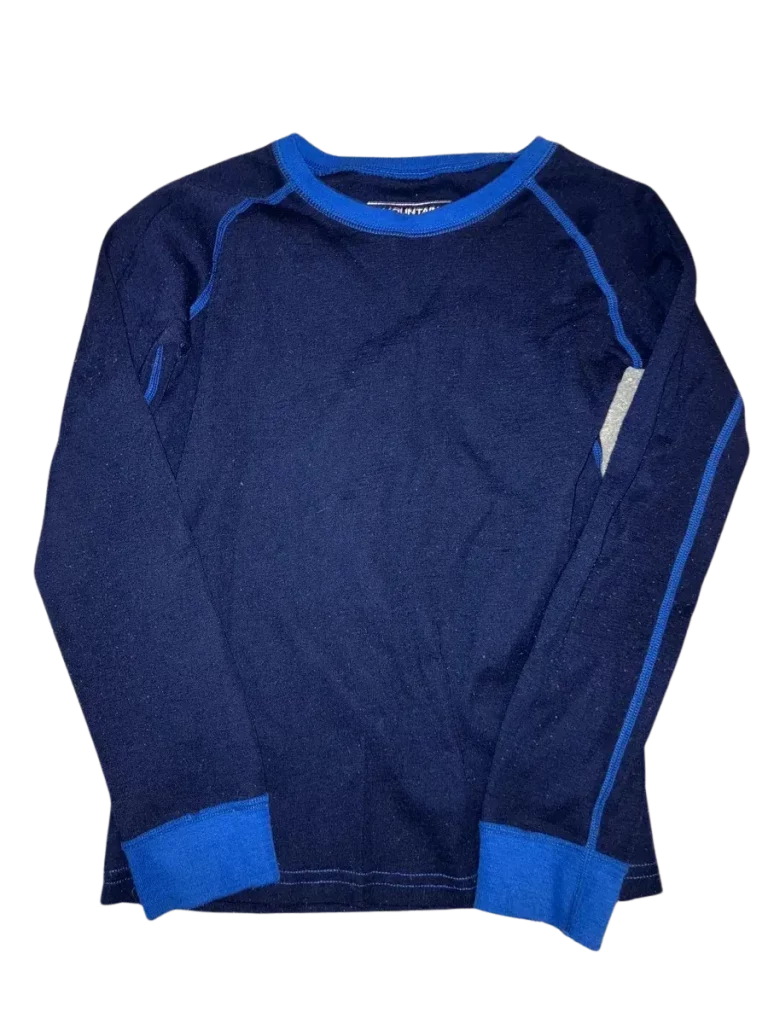
My kids’ merino of choice
(Mountain Warehouse)

🧺 Real-life lessons learned
- Toileting + salopettes: small kids often need a change of salopettes and base layers; ski school and toilet breaks don’t always mix well.
- Hot chocolate accidents happen: pack one spare fleece or jacket if space allows.
- Laundry = flexibility: if you have a washing machine in your accommodation, you can shave down what you bring. If not, a couple of spares for the kids are worth the space.
🎿 Hire or buy?
If your children are growing like weeds, hiring ski clothing can be a game changer, and a much more sustainable option too.
Adventure Kit Hire makes it simple:
- Choose what you want to hire. Some of our favourites:
- Kids’ Roarsome suits for age 1 – 8 (super fun designs!)
- Kids’ jackets, ski trousers or outerwear bundles (ages 4 – 16)
- Goggle hire (kid and adult sizes)
- Glove hire (kid and adult sizes)
- There’s also adult ski wear, boots and even luggage
- Choose the 10-day hire option for a week-long trip.
- They post the kit to you for £15 shipping, which includes a return label, a wash sachet, and a ‘How to clean’ guide.
- When you get home, wash it, pack it back up, and send it back.
- They also sell second-hand gear through their Preloved section, which is great for in-between sizes or keeping costs down.
🎒 Explore Adventure Kit Hire’s ski clothing rental
🐝 Browse the Preloved section for second-hand bargains
💡 Budget & sustainability tip: Hiring ski gear saves money, storage space, and a lot of faff – especially for kids who’ll outgrow it by next season.
🎒 Handy extras for families
These are the small, unglamorous items that make a ski holiday run smoothly. They don’t take much space, but they can save your day (and your sanity).
Packing cubes:
Keeping everyone’s clothes separated stops the daily “where are my socks?” chaos. They also make living out of one big bag less of a nightmare.
🐝 Shop compression packing cubes
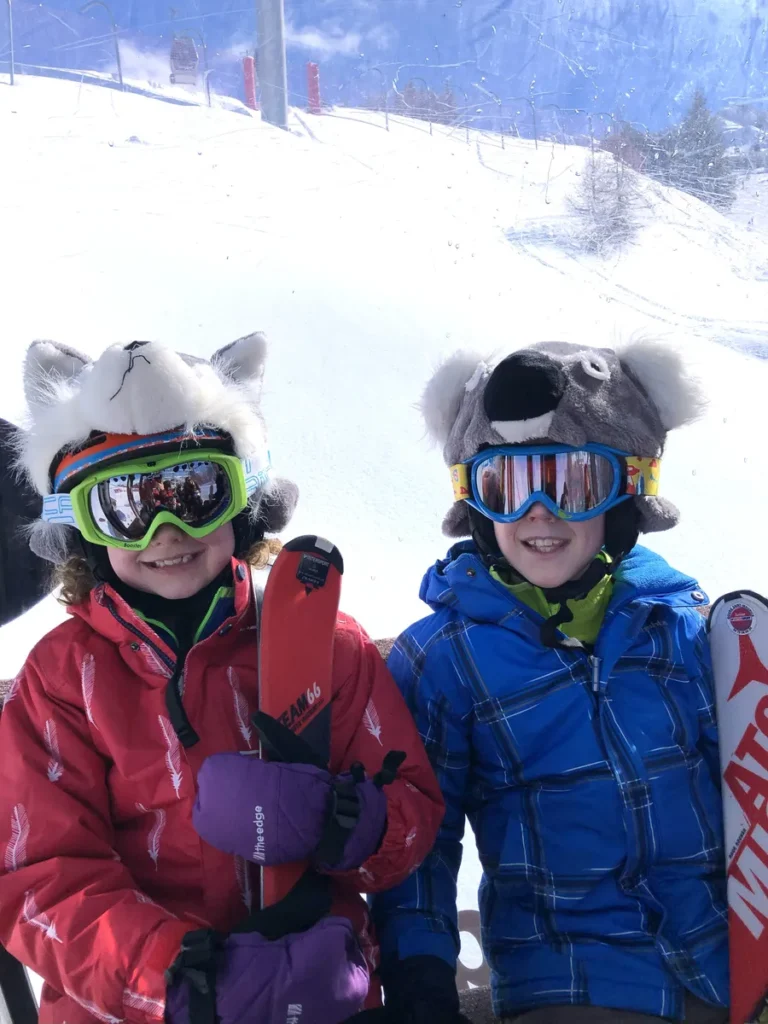
Helmet covers:
We hire helmets each year (kids’ heads grow too fast to buy), but we use animal helmet covers; the kids love them and it means I can recognise them from miles away.
🎿 Find fun helmet covers on Amazon
Travel games and audiobooks:
Perfect for train journeys, transfer days, or downtime in the apartment. A deck of cards or a couple of small games can turn waiting around into family time.
📖 Read: 10 Best Family Travel Games for Lightweight Adventures
Snacks:
Sweets – especially Haribo – are ski day essentials. They double as motivation, bribery, and peace offerings. Keep a few in every jacket pocket.
Washing and drying kit:
A small laundry sachet or a few detergent tabs mean you can rinse base layers midweek if needed.
Check the weather forecast:
It sounds obvious, but conditions in the Alps can vary hugely over the season. Don’t pack for every possible outcome – check before you travel and adjust layers accordingly.
💡 Pro tip: If you’re staying in a self-catered apartment, pack a couple of dishwasher tablets from home. It’s a small thing that makes the first evening far easier, especially when you’re too tired to go shopping.
🧾 Final checks before you go
Before you zip up the last bag and wrestle everything into the car, onto the train, or through the airport, it’s worth doing one last sweep to make sure you’ve got the essentials sorted.
✅ Your pre-departure checklist:
- Travel documents: passports, tickets, insurance details, GHIC card and any booking confirmations.
- Lift passes: if you’ve pre-booked online, you won’t receive physical passes in advance – just a retrieval code to collect them in resort. Keep that handy so you can get straight on the lifts on day one.
- Ski hire vouchers: if you’ve pre-booked your equipment – for example through your SkiSet rental booking – make sure you’ve saved the voucher or booking code for collection.
- Helmets and goggles: make sure they fit properly and aren’t scratched or cracked.
- Chargers and adapters: especially if you’re bringing multiple devices for the kids.
- Medication: travel sickness tablets, inhalers, or anything you won’t easily find in resort.
- Snacks and water: particularly if you’re travelling by train, car, or waiting around at airports.
- Adventure Kit Hire return info: if you’ve hired clothing, you won’t need the return label until you’re back home – but it’s worth keeping it safe so you can find it easily once you return.
💡 Pro tip: Don’t pack all your warm clothes at the bottom of the bag, even if it feels mild when you leave the UK – once you arrive in France, whether that’s at the airport, in Bourg-Saint-Maurice, or partway up the mountain, you’ll almost certainly need your warm clothes!
🎿 Enjoy your trip (and your lighter bags)
Packing for a family ski holiday never feels minimal – but it doesn’t have to be overwhelming either. Once you’ve stripped it back to the essentials, it’s just about keeping everyone warm, dry, and happy enough to make it through ski school mornings without tears (yours or theirs).
After twenty-odd years of skiing in Les Arcs, half of that with kids in tow, I can promise that comfort always beats quantity. One good jacket, decent gloves, dry socks, and a few emergency Haribo go a long way. Whether you’re heading by train, plane, or car, you’ll thank yourself later for every kilo you didn’t pack.
Next reads:
If you’re planning your trip to Les Arcs, you might also like:
