


My 8 year old clung to the platform, staring at the first zip wire. “I can’t do it,” she whispered. We were high up in a forest canopy somewhere in Austria, harnessed in at a high ropes course we’d booked on a whim. She was genuinely scared; and to be honest, I wondered if I’d made a mistake.
But she took a deep breath, stepped off the edge, and zipped through the trees. When she landed, the grin on her face said everything: pride, relief, and a spark of “I did something hard and survived.”
She was buzzing – not because it was fun (though it was), but because she’d done something hard and scary (for her at least). And she’d realised she could do it – AND it was fun.
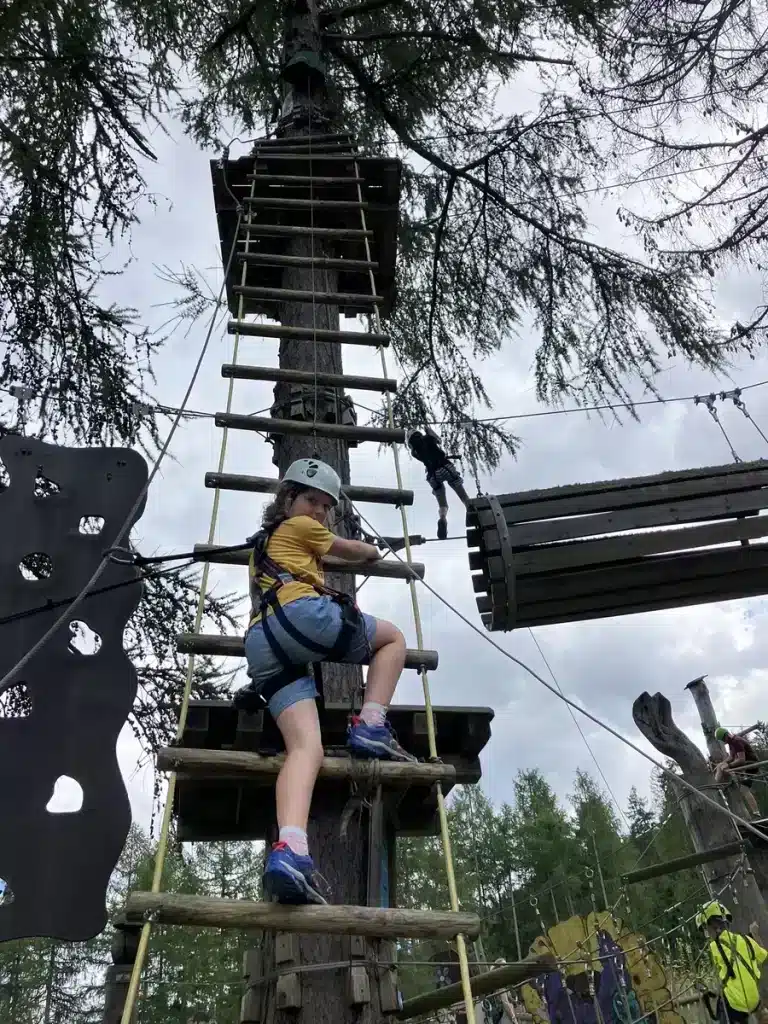
 High ropes nerves
I think lots of people think that adventurous travel is something they might have to give up when they have kids.
Like many parents, I thought our days of multi-day hiking, cycling, and backpacking might have to be left behind when the kids came along, or maybe they were just for families with those fearless kids you see on Instagram jumping off 40 metre cliffs aged about five.
But actually, adventurous travel has transformed not just how we holiday, but how we parent; and it’s helping to raise children who aren’t afraid to try, fail, adapt, and grow.
That’s one of the reasons we travel the way we do. Yes, of course we do it for the spectacular views, good food, adventure and the shared laughs, but we also travel adventurously for the challenges that (hopefully!) are shaping our kids into confident, capable, resilient humans.
In this post, I’m sharing how outdoor travel has become a tool for building resilience in our family, and how it can do the same for yours.
What does “resilient” mean in real life for kids?
When I talk about resilience, I don’t mean being brave by climbing cliffs or jumping off waterfalls. I mean the quieter kind of courage:
- Trying something new, even when it feels uncomfortable or even scary.
- Speaking up in front of classmates, even with butterflies in your tummy.
- Bouncing back from setbacks; like not getting the part you wanted in the school play or doing worse than you expected (and wanted) in a maths test.
Resilient kids aren’t fearless. They just learn not to let fear make the decisions, and they do things even though they’re scared.
And outdoor travel has turned out to be the perfect training ground for that kind of emotional growth.
How outdoor travel builds emotional resilience in kids
When you travel as a family, especially outdoors, challenges come built in. They’re not usually dramatic. More often, they’re the small, difficult moments that build something far bigger over time. Here are some examples we’ve encountered over the last few years:
🥣Eating new foods and stretching comfort zones
Some of the huts we’ve stayed in serve a set menu as part of their half-board offer with few options for picky eaters. You’ve hiked all day, you’re tired and hungry, and the only thing on offer might be something you’ve never seen before.
The kids might not like it, and they’re rarely thrilled about it, but they understand they need the fuel after a long hike. They’ll eat what they need, even if they’re a bit cross about it. And over time, those experiences gently stretch their tastes and broaden their horizons.
🚉Navigating public transport as a team
Whether it’s deciphering a tangle of train platforms in Paris or working out which rural bus stop gets us closest to that day’s hike.
They’re learning how to understand timetables and match icons to meanings; if I tell them which platform or metro line we’re looking for, they help keep an eye out for the right signs. It’s a team effort, and their confidence grows a little each time we navigate somewhere new.
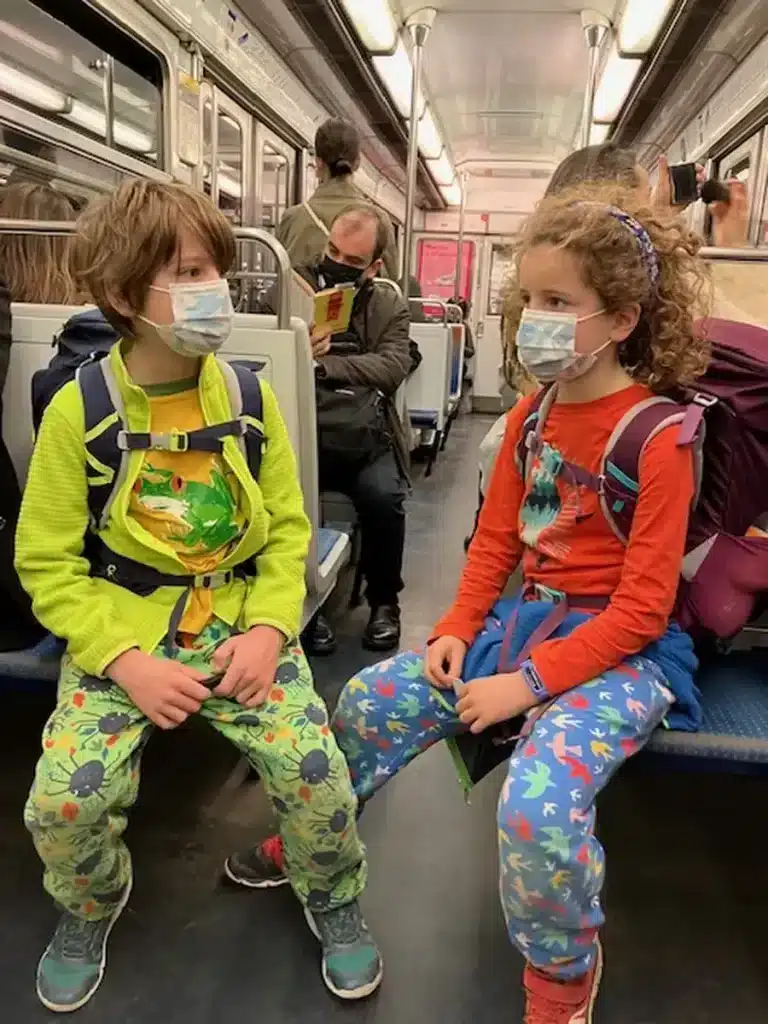 Navigating the Paris Metro in the pandemic
🏙️ Staying aware and calm in busy cities
They’re also getting better at staying aware; knowing to stick close, not draw attention to themselves, and how to look confident even if none of us have a clue where we’re going! They’re learning that composure can be just as useful as knowing the right direction.
🧢 Owning mistakes (even when it’s mum!)
Like when I realised I’d lost both of their caps by unclipping then from my bag and leaving them on a gondola we were long gone from. It was a moment of relatability. Mum loses things too. We all make mistakes!
⏳Learning patience: waiting without meltdowns
Waiting for rural once-every-two-hours buses in the heat.
Waiting for delayed trains that seem never to come.
Waiting on a platform where you can’t understand the announcements.
It teaches patience, and sometimes creativity (and sometimes it spells screentime o’clock)!
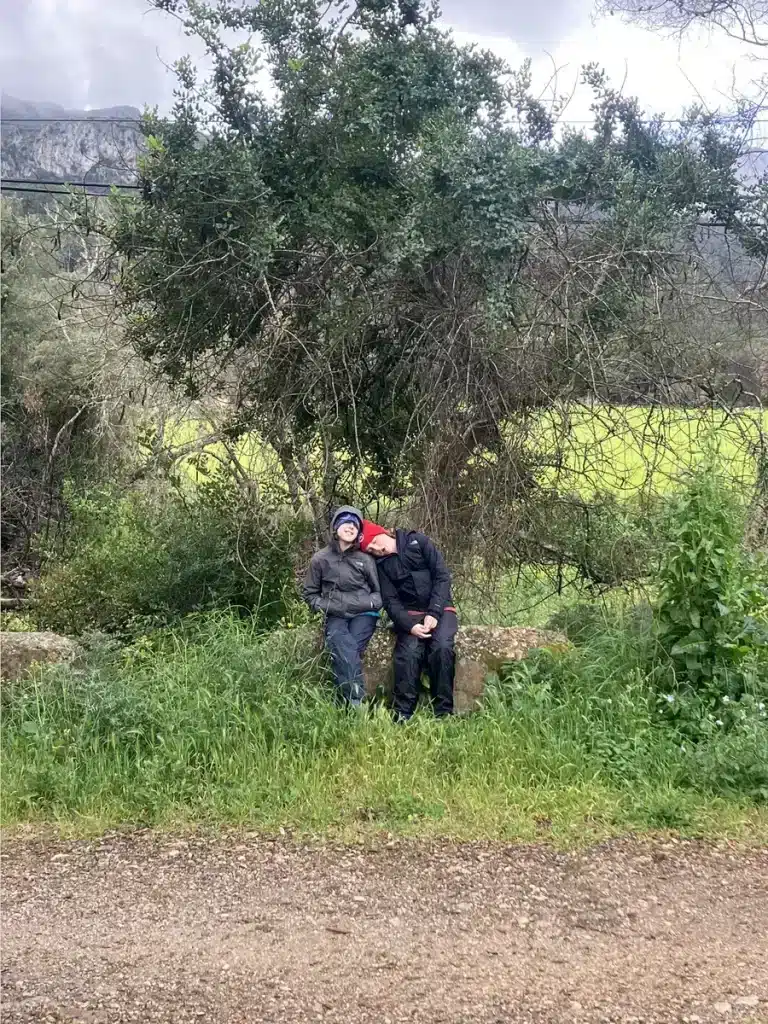 Waiting for the (very irregular) bus in Mallorca
📱Working out when screen time is useful (and when it isn’t)
I’m generally pretty strict about it at home, but this kind of travel has helped us all strike a better balance. After a full day of hiking, canyoning or cycling under the sun, I’m completely fine with the kids zoning out on their devices for a bit.
They’re learning when screen time can be a helpful distraction and when it turns into a time-suck. And because they’ve been so active and engaged, the downtime feels well-earned; not something we have to ration, but something they’re learning to manage themselves.
🎒Overcoming physical challenges
– Carrying your own pack – up mountains, or even just from station to hostel.
– Hiking uphill when you’re already tired and there’s still an hour to go.
– Cycling through a heatwave, just keeping your pedals turning because the next night’s accommodation isn’t going to come to you.
 A very tired cyclist
💥 Big adventure moments
Sometimes it’s the paid-for, organised adventures that bring big leaps: canyoning down rivers, white water rafting, high rope courses, alpine coasters that make your stomach drop.
🌊 Facing water worries: cold, murky, or fishy
My kids love swimming – lakes, rivers, outdoor pools – they’re not fussy!
But that doesn’t mean it’s always easy. Sometimes it’s really cold. Sometimes fish brush past their legs, or there’s mud between their toes, or the water looks a bit murky.
Those first few moments can be uncomfortable, even a bit nerve-wracking. But they’ve learnt that a bit of discomfort at the start doesn’t mean it’s not going to be brilliant.
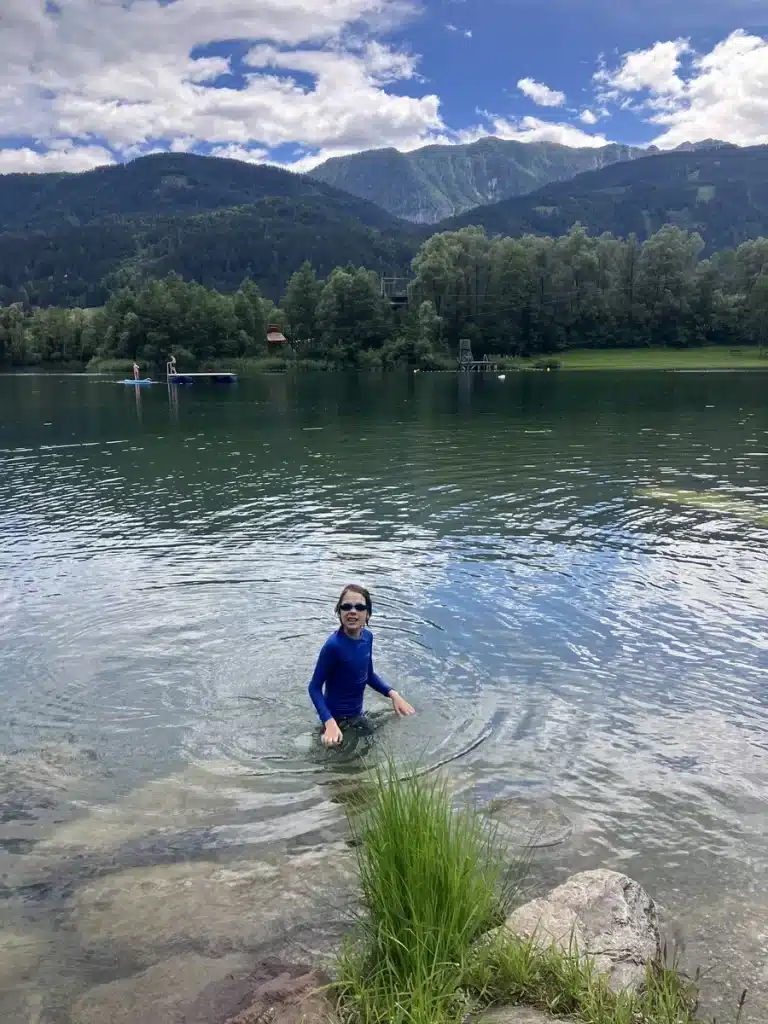 A chilly lake in less than warm weather
🚴 Getting hurt and carrying on
Like when my 10-year-old crashed hard on the Tauernradweg, grazing his thigh quite badly (and his elbow) midway through a long day of cycling. There was no option to stop or turn back; the next town, the next bed, the next meal were all still ahead.
So he got back on his bike and kept going, because he had to. He was surprisingly brave and determined.
 Bike injuries!
(As an aside, the pharmacies in Austria—and honestly, most of continental Europe—are brilliant. We found exactly what we needed to clean and dress the wound, and even managed to get proper waterproofing kit so he could still swim in lakes and outdoor pools afterwards. It made such a difference, both physically and mentally.)
These moments go a long way toward building confidence in kids. They’re uncomfortable at the time and sometimes funny in hindsight, but each one adds another layer of resilience, self-belief, and trust in their own capability.
Adapting when plans go wrong
And all of these moments build adaptability too. Plans change, buses don’t show up, the weather turns, and the children learn to adjust. They’re learning that you’ll never have control over everything, but that you can adapt when things don’t go to plan.
And the best part?
Even if the kids wouldn’t call themselves brave, these experiences shape how they handle challenges – in travel and back home.
What adventure travel has taught me as a parent
This style of family adventure travel has reshaped not just our holidays, but how I parent.
I haven’t got it all perfectly worked out. I still lose my cool, forget things (sometimes important things), and have the occasional meltdown, just like the kids.
But this kind of travel has nudged me towards letting go of the need to control everything. Plans fall apart, kids get grumpy, trains get missed – and I have to deal with it. I’m still learning, but I’m getting better at seeing those moments as part of the experience rather than something to fix.
I try not to jump in too quickly when things go wrong. My instinct is still to smooth the path, but more often now, I pause and let the kids try first. Sometimes they manage it. Sometimes they don’t. But either way, they’re learning.
One thing I’ve noticed is that we’ve started to feel more like a team. We’re not always on the same page, and there’s definitely still bickering (a lot of bickering!) but we muddle through together. And I don’t think it’s about being especially brave or outdoorsy; it’s just the result of doing little things that push us out of our comfort zones.

 Hiking the GR221
You don’t need to take on a huge expedition. You don’t need fancy kit or a background in the outdoors. You just need to be open to a bit of shared discomfort, expect some great rewards in return, and to know that it won’t always go smoothly – and that’s exactly the point.
And no, my kids aren’t especially resilient or brave or patient by nature. They complain. They argue. They ask for screen time. But every time we travel like this, they handle a bit more, try a bit more, and come away with something new.
How to start family adventures that build resilience
If the idea of hiking with kids or navigating new places sounds daunting, you’re not alone.
You don’t need to go off-grid or take six months off work. You just need to start saying yes to small shared challenges, the kind that stretch you all a little without overwhelming anyone.
Start small: one or two nights is enough
A short hut to hut trip can still pack in a huge amount of adventure. One of our favourite early experiences was a 2 night hut to hut hike in the Italian Dolomites; not too far, not too technical, and a brilliant way to try sleeping in a mountain hut without committing to a full week. It was manageable, even with younger kids, and gave us a taste of what was possible, alongside to-die-for views.
If you’re not sure about huts, you could try a family-friendly hotel or simple guesthouse base and plan day trips from there. Somewhere like Lake Ledro in Italy or Lienz in Austria offers access to swimming, day hiking, and bike paths, all without needing a car.
 In front of the Tre Cime, Dolomites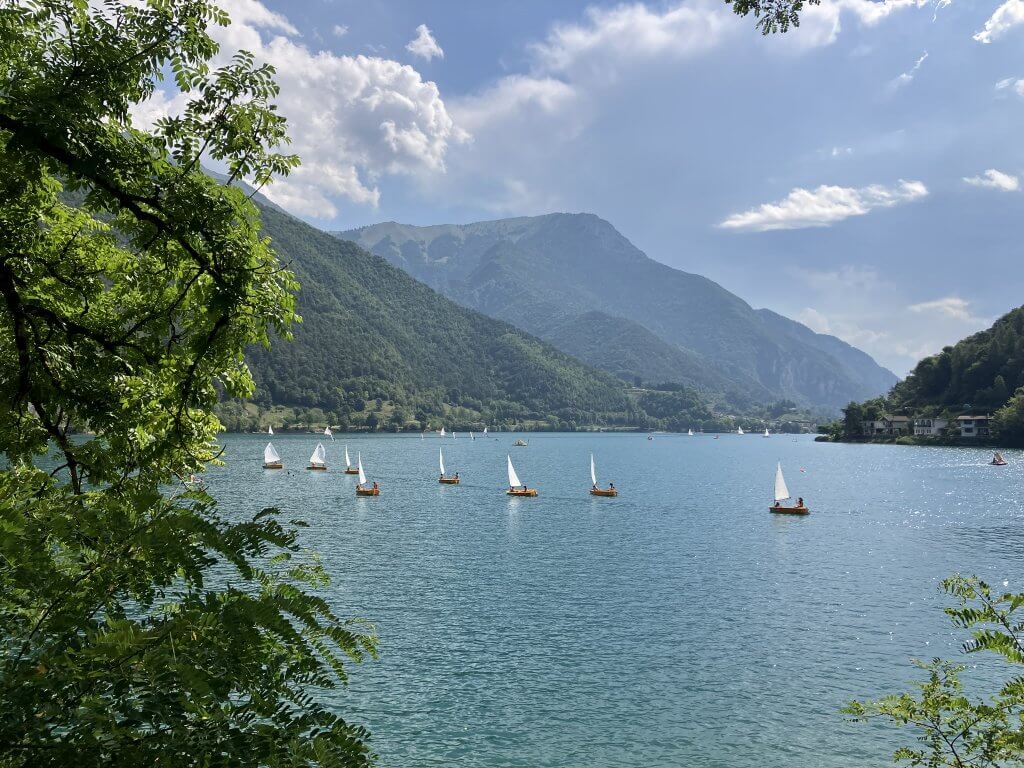
 Lake Ledro, Italy
Choose trips that build confidence
Train travel is another great way to ease into family adventures; it’s exciting for kids, and full of new experiences without being completely novel. If you’re not ready for a full Interrail pass yet, try an overnight journey like Vienna to Split on the sleeper train, or spend a night in Paris with kids on your way to the Alps. You’ll all learn a lot just by reading timetables, changing platforms, sleeping on a moving train and navigating meals and downtime en route.
 Overnight train excitement
Try easy cycling routes with great infrastructure
If your kids can ride confidently, cycle touring can be a brilliant entry into family adventure. Routes like the Drau Cycle Path or Adige Cycle Path are traffic-free, mostly downhill, and full of lakes, play stops, and ice cream. You don’t have to carry camping gear either, hotels and guesthouses along the way make it easy to keep things light.
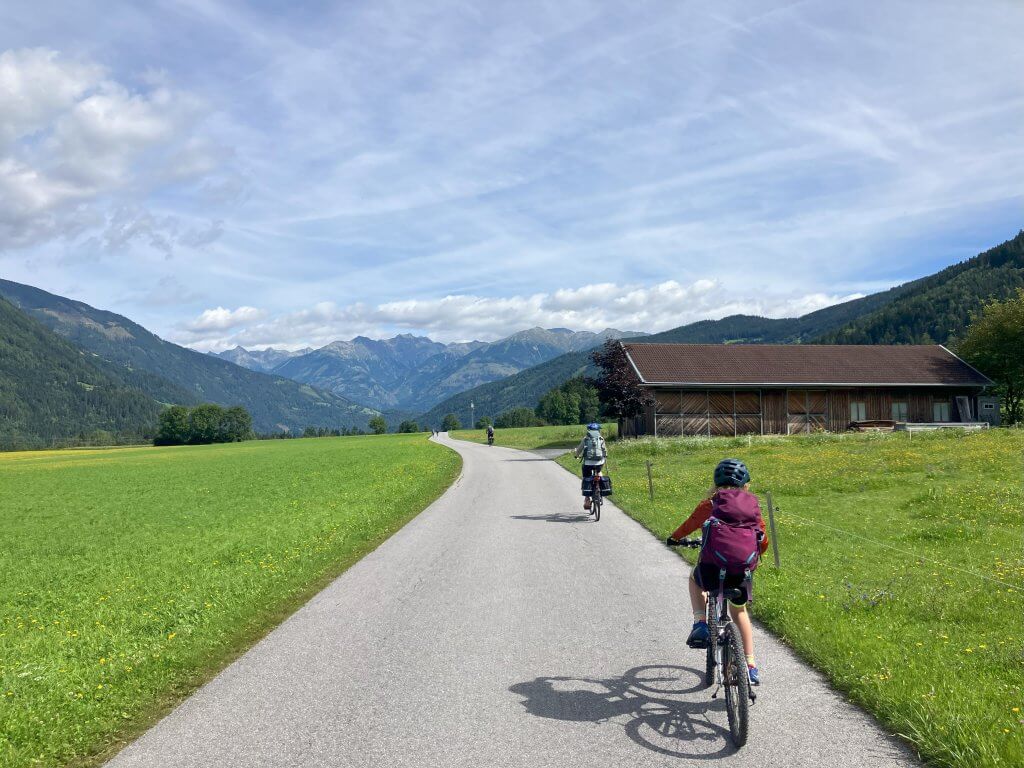 On the Drau Cycle Path
Go a little deeper into nature
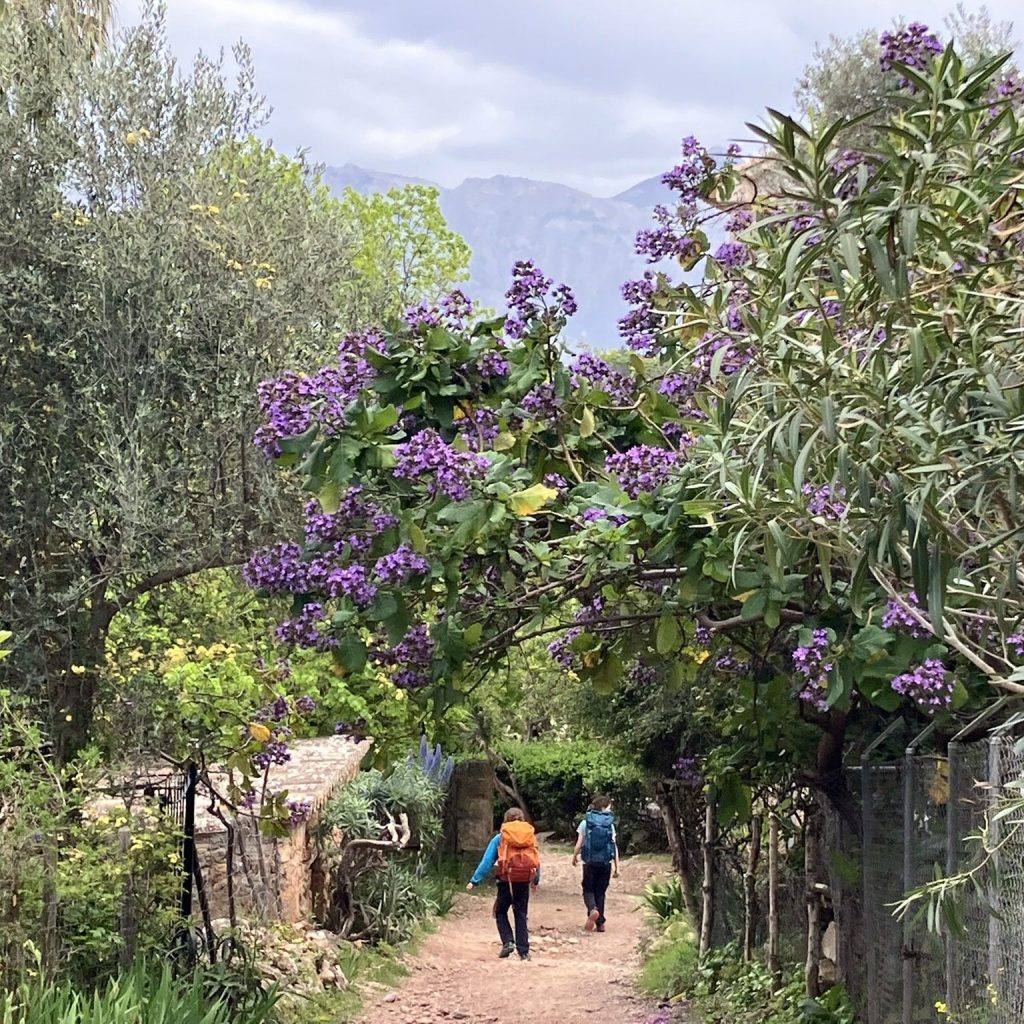
If you’re ready to try a longer walk, but still want flexibility, my family-friendly GR221 itinerary in Mallorca is a brilliant place to start. You can shorten stages with public transport and stay in rustic but welcoming refuges. Have a look at some of my other family friendly hut hikes for more ideas.
Adjust your expectations (not your ambition)
Here’s the honest bit: it won’t always be fun in the moment. You will get rained on. Someone will lose their sunglasses. An ice cream will get dropped (once my daughter somehow pushed her massive glass bowl of un-eaten ice cream off the table onto the café floor and it smashed spectacularly into a million pieces). Someone (me?!) will have a meltdown halfway up a hill. But you’ll work things out, and so will they.
You don’t need to be “outdoorsy.” You don’t need fancy kit. You just need a willingness to push slightly out of your comfort zones together.
My kids still grumble, still get tired, still bicker. But each trip teaches them something new about the world. And it reminds me that resilient kids aren’t born. They grow, slowly, through shared experience.
Why resilient children are built, not born
I want my kids to grow up resilient. I want them to be able to handle the unknown, adapt when things don’t go to plan, keep going when things get tough, and feel capable even when everything’s unfamiliar. I want them to build character and the kind of resilience that really helps in real life: learning to trust themselves, keep going, and figure things out as they go.
That’s not the main reason we travel this way, though; we do it because we love it. It’s fun, it takes us to beautiful places and it’s a real adventure.
Turns out, one of the unexpected perks of travelling this way is just how much it builds resilience in our kids – nothing dramatic, just real children learning real-world skills.
And resilience doesn’t appear overnight. It builds gradually, through all the little things: trying the weird dinner, climbing the last hill even when you’re tired, getting soaked and carrying on anyway, laughing when the plan goes completely sideways (okay, the laughing probably comes later in that situation while I lose the plot briefly)!
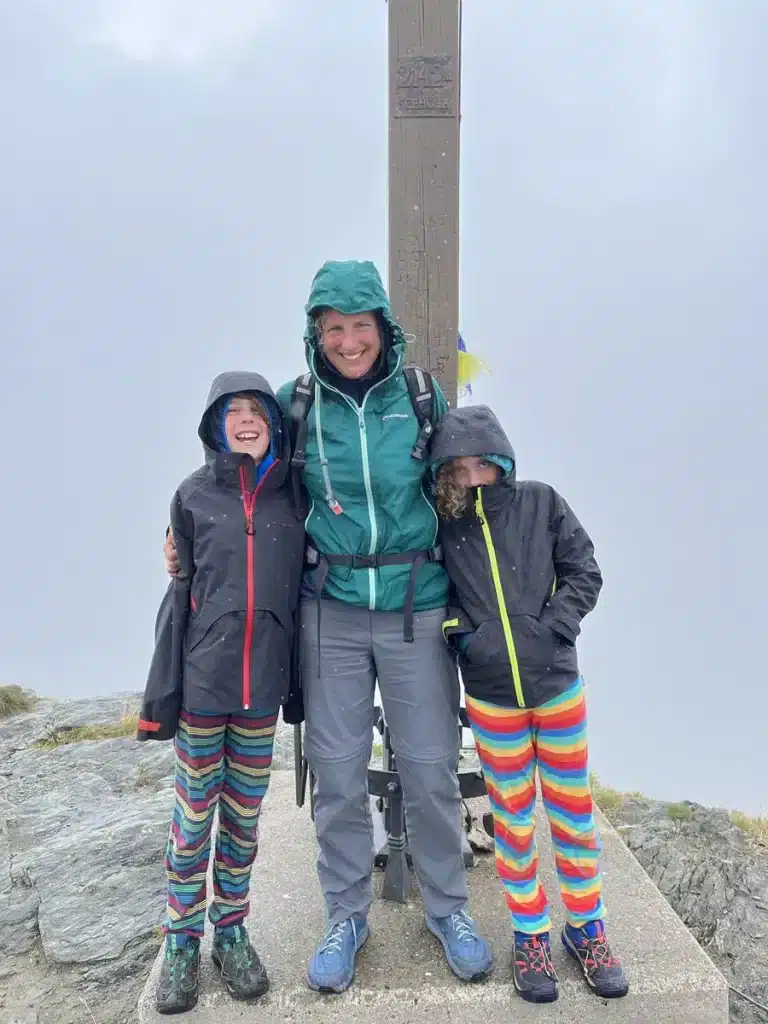 In the rain on top of a mountain
It’s not just the kids, either, it helps me to let go of the perfect plan (some might say that I am a bit of an obsessive planner…), to stay calm when things go a bit wrong and to step back sometimes and let the kids work things out themselves (even when it’s slower, messier, and mildly stressful).
You don’t need to plan something epic – just try one small adventure and see where it takes you and your family.
🌟 Want to help your kids grow more resilient, one adventure at a time?
You don’t need epic gear, a six-month sabbatical, or kids who never complain. You just need to start saying yes to small challenges; the kind that stretch your family a bit, build confidence over time, and give everyone a chance to work things out together. If you’re curious about family adventure travel but unsure where to start, I’ve got suggestions that don’t require expert skills or expensive gear.
Ready to try it?
👉 Start simple with one of our favourite beginner hikes with kids – accessible, fun, and confidence-boosting without the overwhelm.
👉 Curious about family cycling adventures? The Drau Cycle Path in Austria is a perfect intro: mostly downhill, full of lakes and ice cream stops.
👉 New to train travel? Explore our favourite train travel adventures here for adventure without the stress.
👉 Or dive into our full adventurous family travel itineraries to find the right challenge for your crew.
👉 Looking for practical travel parenting tips? You’ll find lots on information in my Family Travel Tips section.
These trips don’t have to be big or brave. Just a little different from your norm – and enough to remind everyone (yourself included) that you’re capable of more than you think
