


A family surf holiday in Spain wasn’t something I’d ever properly considered until recently. I’d always lumped southern Spain in with high-rise hotels and package holidays.
But Andalusia is not that!
We spent a week based in El Palmar de Vejer, with a surf lesson each day in nearby Conil.
Five days in the water, tired kids, salty hair, and a daily routine built around the tides rather than sightseeing.
Before booking, I had looked at family surf camps – they’re the obvious option, and they do make things simple. But for a family, they’re not cheap.
Renting a self catering place for the week and booking lessons separately worked out much better value for us, and also gave us more flexibility around food and downtime.
If you’re wondering whether a family surf holiday in Andalusia is doable; especially if you’re pretty much beginners like us, this is the honest version. What it’s actually like, what worked well, what didn’t, and what I’d change next time.
Why Andalusia is perfect for a family surf holiday in Spain
This part of southern Spain feels very different from what most people picture.
You’re on the Atlantic coast here, not the Mediterranean. That means proper waves, quite a bit of wind (nearby Tarifa is famous for being a wind- and kite-surfing mecca), and a coastline that feels much more like a barefoot hippy destination than a package holiday strip.
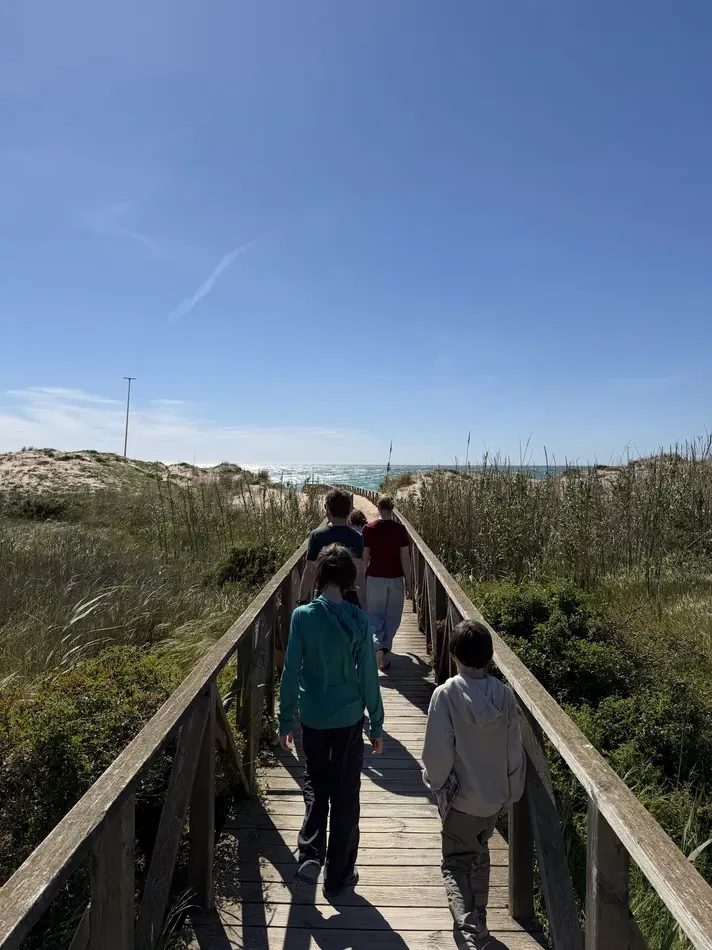
It’s also far less polished. El Palmar in particular has a slightly backpackery, surf-town feel; beach bars and campervans strung out along the dusty road next to the beach, and sandy feet everywhere.
It’s relaxed, a little bit scruffy, and all the better for it; perfect for low key family surf holiday in Andalusia.
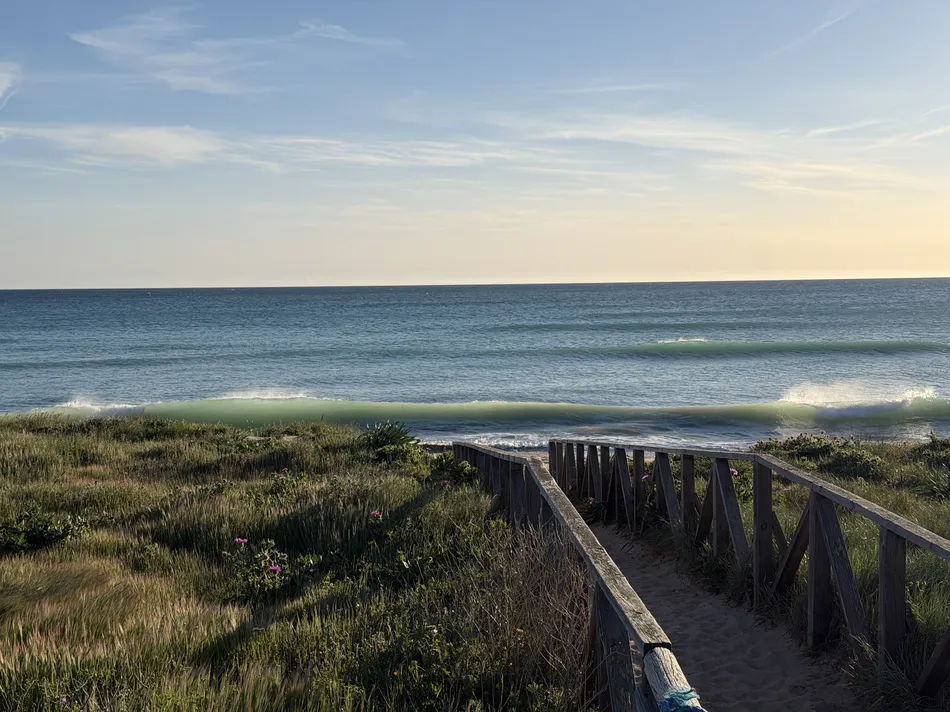
The beaches are long, sandy, and forgiving. There’s plenty of space, consistent waves, and surf schools used to teaching beginners as well as slightly wobbly improvers like us.
One thing that might put people off is the idea of organising it all yourself (rather than going for a surf camp where it’s all organised).
In reality, it’s very simple. You’re basically booking two things; somewhere to stay and your surf lessons. That’s it.
Food is easy to figure out once you’re there. There’s a big Aldi in Conil, plus smaller supermarkets in El Palmar you can walk to, and plenty of cool relaxed places to eat if you don’t feel like cooking.
The rest of the day takes care of itself. You surf, you eat, you chill. Two hours in the water battling the waves is surprisingly exhausting, especially for kids!
If you’re after something polished and fully organised, a surf camp or resort might suit you better.
But if you want a trip that’s active, flexible, and doesn’t cost a fortune, this stretch of coast is a very easy place to do it.
Getting there: from Interrail to the Andalusian coast
We arrived in Seville by train as part of a longer Interrail trip (from Oxford → London → Paris → Barcelona → Córdoba → Seville over six days. Here’s the write up!)
From there, it’s a very straightforward drive to the coast.
El Palmar and Conil are about 1 hour 45 minutes from Seville, on very easy roads (and easy navigation), so it’s an easy transition from city to beach.
Car hire in Seville
We booked our car through Discover Cars, which seemed really good value at £244 for a week.
Discover Cars is a car hire consolidator, and the main thing I’d recommend is choosing a well-known hire company from their results. There are usually cheaper options, but if anything goes wrong, it’s much easier dealing with a more established company.
Once I’d make the booking through their platform, I had a great, well organised experience with them.
The voucher they sent me was very clear and useful. It clearly listed payments made and what would be due at pick-up plus the security deposit (so no surprises!). It also listed all the documents I needed to bring, and included a simple checklist of things to watch out for; like inspecting the car properly, understanding the drop-off process, and avoiding unnecessary extra insurance.
Pick-up at the train station in Seville was really quick and smooth, and the car was exactly what we needed.
We dropped the car at Seville airport at the end of the trip, which cost about £20 extra (one-way fee) compared to returning it to the station. For us, that was well worth it; much easier than driving back into the city and then having to make our way back out to the airport.
Do you need a car?
Yes, realistically.
You can walk around El Palmar once you’re there, but public transport in the region is minimal, so getting there is tricky without a car! You’ll probably also want a car for:
- Driving between El Palmar and Conil (about 10 minutes)
- Supermarket runs (especially the big Aldi in Conil)
It just makes the whole trip simpler and more flexible.
Where to stay: El Palmar vs Conil (what we’d choose again)
We based ourselves in El Palmar and drove to Conil each day to surf. (You can also surf in El Palmar – I’ll explain why we chose to surf in Conil later).
Both work well, but they feel VERY different – it’s kind of nice seeing both!
El Palmar – laid-back surf town
El Palmar is all about the beach.
It’s a long stretch of sand with surf schools, campervans, and low-key beach bars dotted along the small road which runs alongside the beach. Behind the beach, there’s a small, spread-out settlement, with villas and low-rise apartments dotted between fields, palm trees, and bits of open land. A lot of the roads aren’t even properly tarmacked! It’s rural, a little scruffy and unpolished, and that’s part of the appeal.
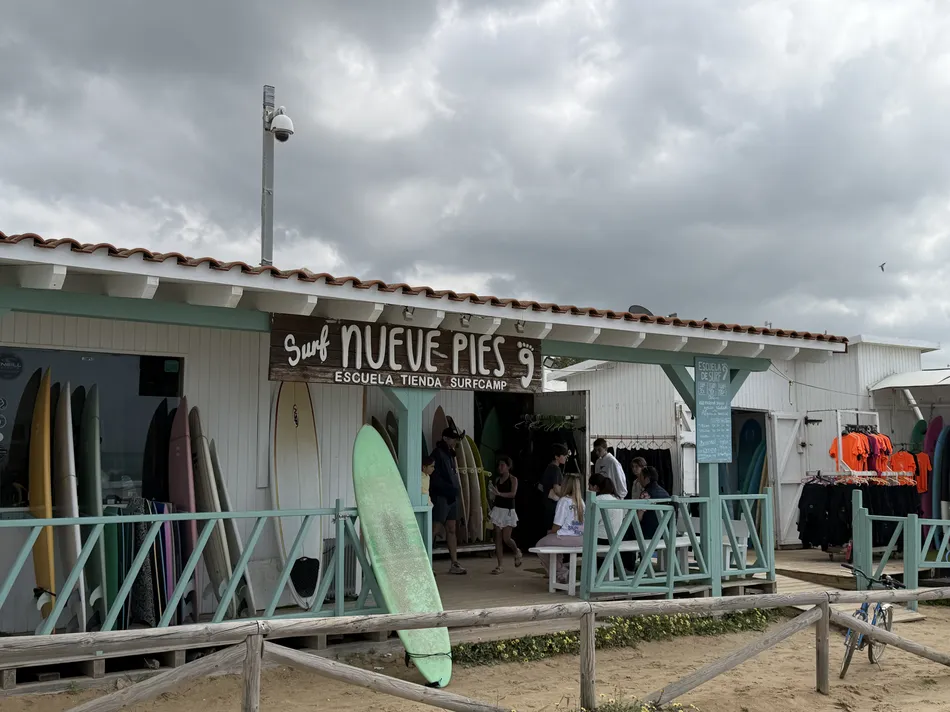
There’s not much by the way of facilities (no bank or ATM for example), but you can walk to multiple cafés and bars, a couple of small supermarkets, and there are some great, cheap places for dinner. Most days, you don’t need to get in the car once you’re back from surfing.
It has a real hippy, backpackery feel – like you’re really at the end of Europe (which you are!). It’s more Costa Rica than classic Spain!
We really liked it.
Conil – a lively Andalusian beach town
Conil is a small, lively beach town. It’s a dense cluster of typically Spanish whitewashed buildings set just back from the beach, with winding streets, lots of low-rise apartments, and a slightly stacked, lived-in feel. It’s well-kept and full of character.
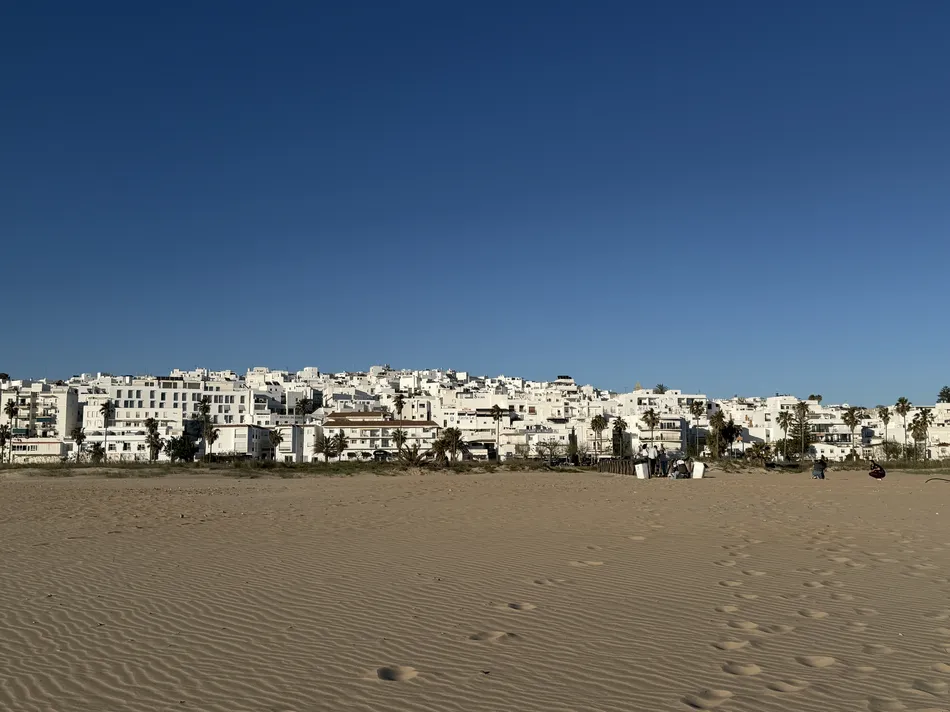
You’ve got lots of narrow streets filled with restaurants and bars, and from parts of town there are great views out over the sea.
It feels much more traditionally Spanish than El Palmar, but also more built-up. Less nature, more buildings. More of a town, and at times, more of a party atmosphere.
When we arrived over Easter weekend it was busy and a bit touristy, but it quietened down a lot afterwards and felt much more relaxed.
My honest take
We were glad we stayed in El Palmar.
It felt much less touristy and more rural; more space, less busy, and everything a bit more relaxed, with a cool surfy vibe – lots of campervans, surfers and digital nomad types hanging around.
After surfing, it was nice to come back somewhere relaxed where we had space to roam rather than into a busier town.
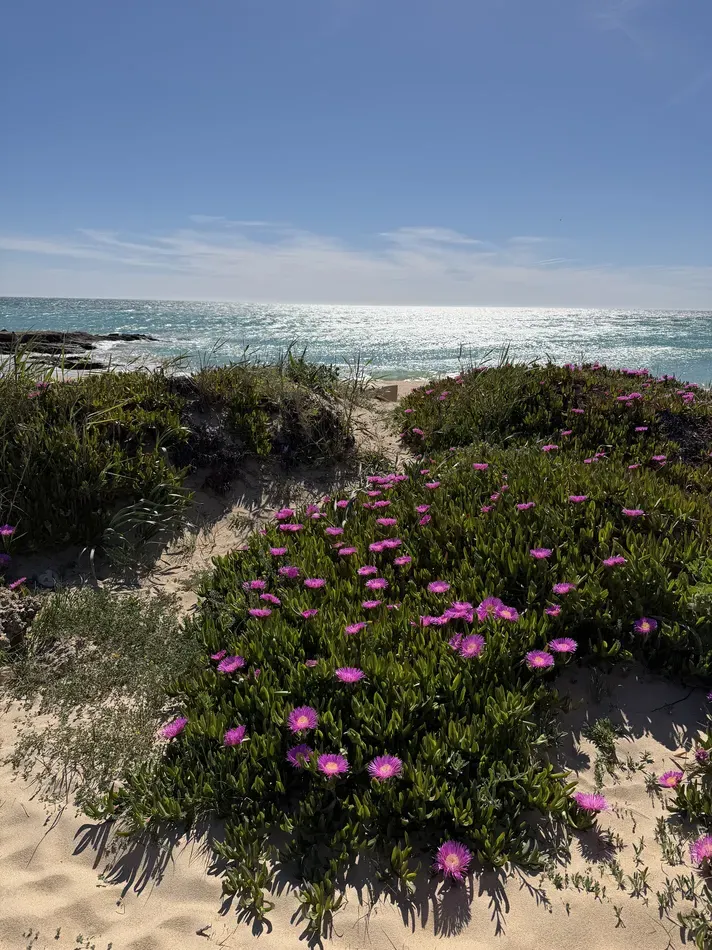
However, we did drive to Conil every day to surf (about 10 minutes), as the beach there felt slightly better for learning; a bit less steep and more forgiving.
What I’d do differently next time
If we did the trip again, I’d definitely still stay in El Palmar, but Conil is definintely worth visiting!
I’d look at booking lessons with a surf school in El Palmar so we could walk to lessons instead of driving to Conil. We liked the look of Nueve Pies Surf El Palmar.
I think the waves in Conil are possibly a bit easier for beginners and there seemed to be fewer other classes in the water, while the beach at El Palmar is more exposed and at times there were quite a lot of beginners waiting for the same waves, but there’s not much in it.
📦 Where to stay in El Palmar (places I’d actually book)
If you’re going the DIY route (which I would), these are the kinds of places that work really well for a family surf holiday in Spain.
All are in El Palmar, within walking distance of the beach, and good options for families.
Budget Options
🏡 El Madroño – best all-rounder for families
- 2-bedroom house with garden and pool
- Quiet location but still walkable to the beach
- Great reviews for cleanliness and helpful host
- Good value (especially for a week)
🏡 Casa Basallote – closest to the beach
- Just a few steps from the beach
- Lovely outdoor space with BBQ
- Highly rated for location and simplicity
Mid-Range Options
🏡 CasaMaria 50 metros de la playa – best for larger families
- 3-bedroom setup (sleeps up to 6)
- 50m from the beach
- Good mix of space + location
🏡 Casa El Palmar 1 – great with a pool
- 2 bedrooms + private pool
- 5-minute walk to the beach
- Well set up for a comfortable stay
Bigger Options
🏡 Casa Manoli – simple and relaxed
- Huge garden (big plus with kids)
- Close to beach and bars
🏡 Casa con jardín y barbacoa en El Palmar – spacious, good for small groups
- Gorgeous Spanish style 3-bedroom house (sleeps up to 6)
- Large outdoor space with garden + BBQ
- Quiet location, short distance from the beach
- Plenty of room for kids to spread out
🏡 Casa Villa Luna – if you’re going big (group trip)
- Large beachfront villa (sleeps up to 10)
- Pool + sea views
- Great for sharing with friends
Where to eat in El Palmar (easy, relaxed options)
Food here is straightforward and good, and you don’t need to plan much – there are loads of places strung out along the road overlooking the beach, most with nice terraces with great views of the sea.
We mostly mixed self-catering with eating out, depending on how tired everyone was after surfing.
ZOCO El Palmar – best for dinner
This was our favourite place to eat.
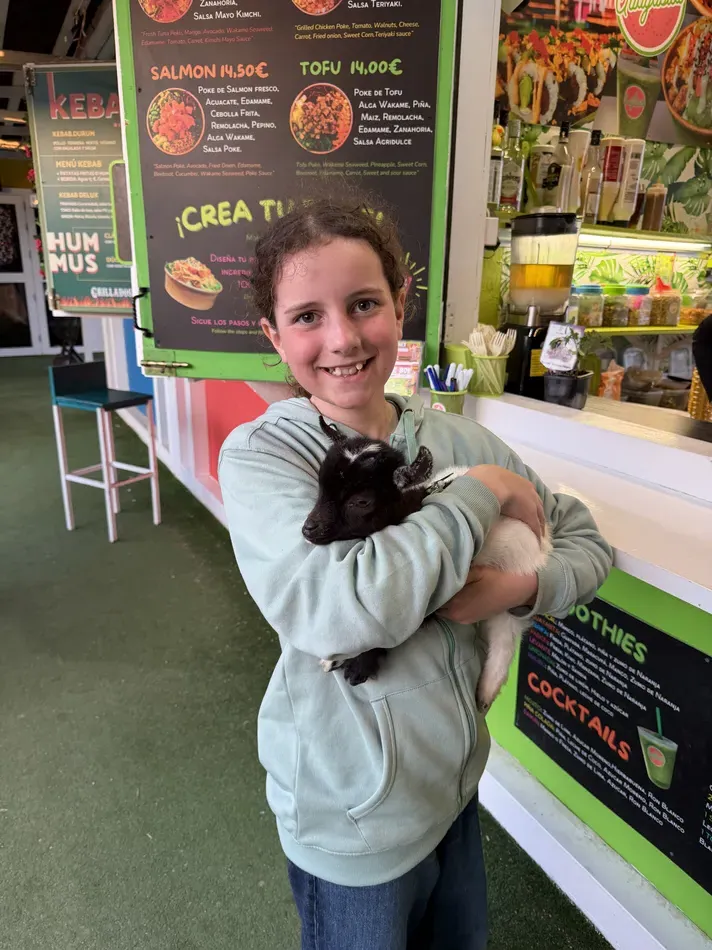
ZOCO is a collection of food stalls, small shops, and a bar set around an two open squares (one outdoors and sea facing, one inside and shaded) with long shared tables. It has a bit of a festival feel in the evenings.

There’s loads of choice; pizza, tacos, sushi, burgers, fried fish; so everyone can pick what they want and still eat together.
There’s often something going on too (music, kids’ activities), and best of all, the poke bowl / ramen place (La Guayabita Beach) has a pet pygmy goat!
El Cartero – breakfast
We had breakfast here – toasts with various fresh toppings and a nice terrace with views to the beach and sea.
Natura Playa – breakfast
Good coffee, fresh juices, and a good line in breakfast options. Big sofa bean bags on the terrace overlooking the beach.
Surfing in Andalusia with kids: what it’s actually like
If you’ve never surfed as a family before, this is probably the bit you’re most unsure about.
I’ve surfed a bit on and off since I was a teenager, but wouldn’t call myself experienced. The kids had done one week of lessons in Devon the previous October half term; so we were all still very much in the beginner / early improver stage.
It worked really for all of us; and the area is absolutely suited to beginners or relative newbies.
Is it suitable for beginners and kids?
Yes! This is a really good place to learn.
The beaches are sandy, the waves are consistent but not intimidating, and there are plenty of surf schools used to teaching kids.
You’re not dealing with reefs or big crowds in the water; just rolling waves and lots of space.
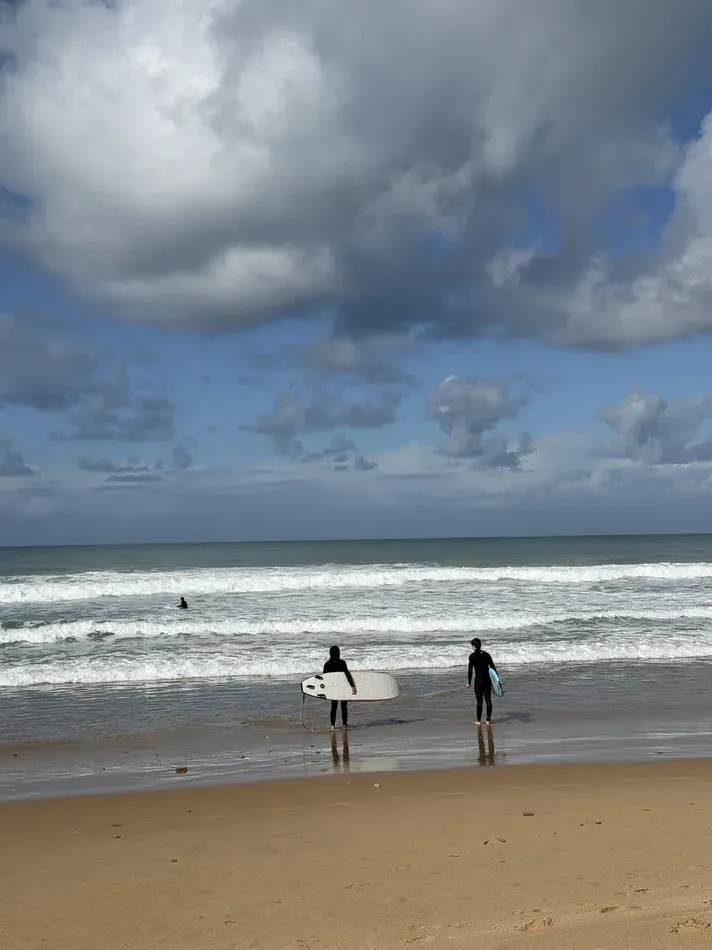
One of the kids in our group (aged 7) had separate instruction alongside other smaller kids if there were any that day (for no extra cost) which worked really well. It meant he got proper attention rather than just being swept along in a group of much bigger kids and adults.
Water temperature (is it freezing in April?)
This was one of my main concerns before going (particularly as my son is a beanpole and prone to getting cold); as although we were far south it’s still the Atlantic straight after the winter months!
It’s not warm; but it’s also not terribly cold. It’s pretty similar to the water in Devon in a mild UK summer. You’ll definitely need a wetsuit, but once you’re moving, you’re fine.
For my son who feels the cold, we brought with us:
- A thermal rash vest
- Or a thin merino layer to go underneath
That made a noticeable difference for his ability to stay in the water for longer.
The air temperature is also pretty warm by April (we were looking at between 17 and 25°C), so you warm up quickly once you get out!
What the surf lessons are actually like
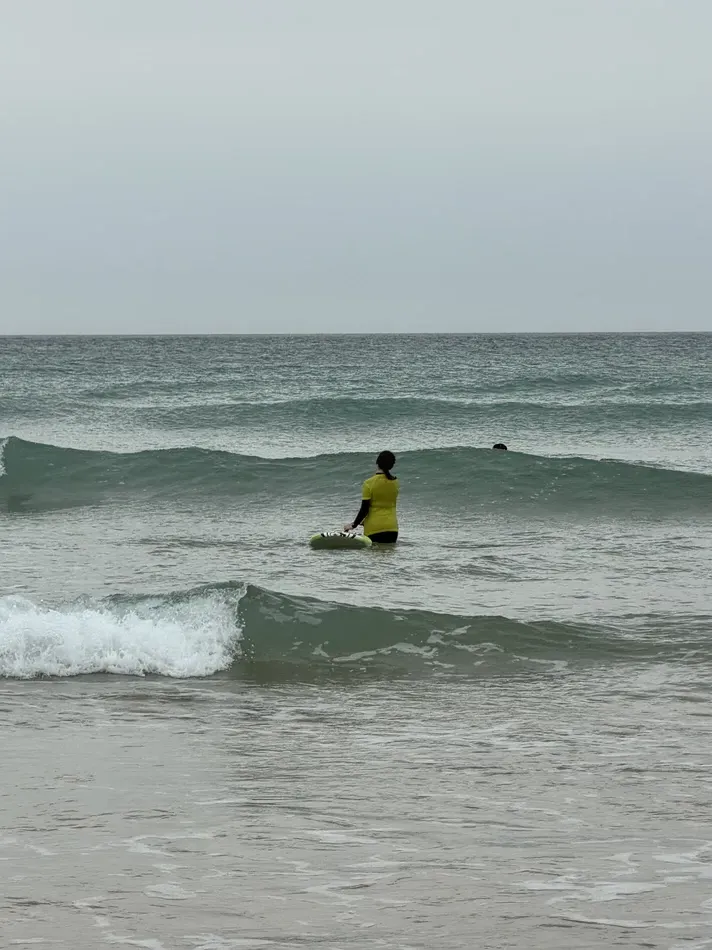
We surfed for five consecutive days, two hours each day.
Two hours was plenty; especially for kids. By the end, everyone was pretty tired, and neither me or my kids felt the need to do extra surfing outside the lessons.
The coaching was good. Small groups, lots of time in the water, and plenty of individual tips rather than just generic instruction.
One thing I noticed – the boards at the surf school we used were slightly smaller and less forgiving than the big foam boards we’d used in Devon. Still beginner-friendly (and foam), but definitely a bit less stable.
Not a problem, just something to expect.
One thing to know: lesson timings
We didn’t get a fixed lesson time for the whole week, instead we were told the time the day before, based on the tides, wind and swell forecast to ensure we were surfing at the best possible time (for our ability!) each day.
This means that you can’t plan much else around the surfing in advance, but it was really nice to be forced to take things easy, especially after our fairly full on interrail journey to get there!
Our experience with Trafalgar Surf School (Conil)
We booked lessons with Trafalgar Surf School, who operate out of a trailer in the Playa los Bateles beach car park in Conil.
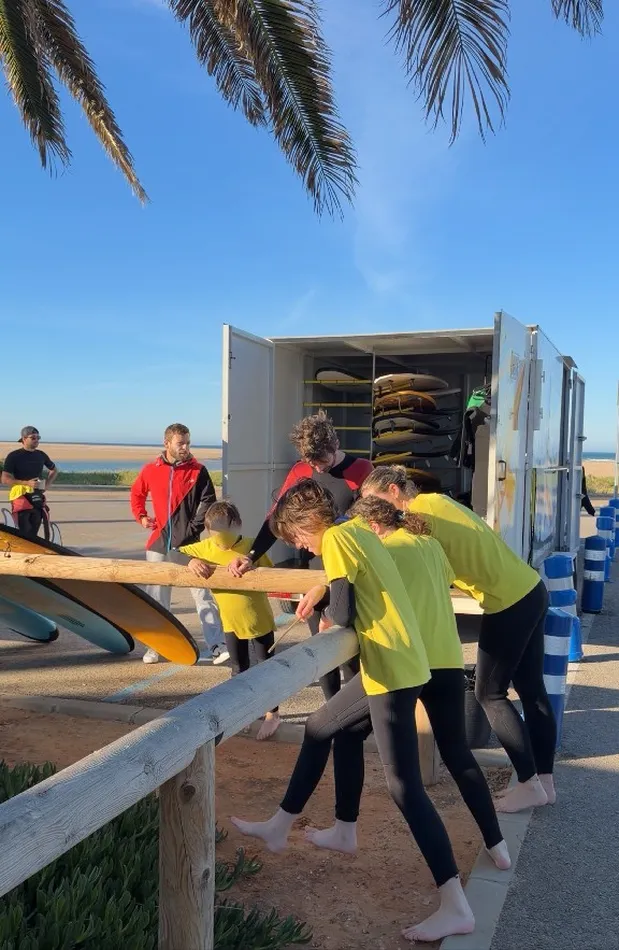
It’s a simple setup – turn up 15 minutes early to get your wetsuits and rash vests on, grab your boards, and head down the wide beach to the water.
Here we’d have a chat about what the waves and currents were doing, be led in a proper warm up and some pop up practise, then straight into the water.
Lessons, structure and cost
We surfed for five consecutive days, two hours each day.
That worked really well. Two hours was enough to learn and improve, without completely exhausting everyone (although the kids were definitely pretty wiped by the end – not in a bad way).
Lessons cost €135 per person for the week, including the kids, and including the 7 year old who had a separate instructor (the lesson could be shared with other smaller kids but many days there weren’t any so he had a private lesson!)
Group sizes varied slightly day to day, but when more people joined, they added more instructors, so it never felt crowded, and we had the same instructor throughout the week.
What worked well
The coaching was consistently good.
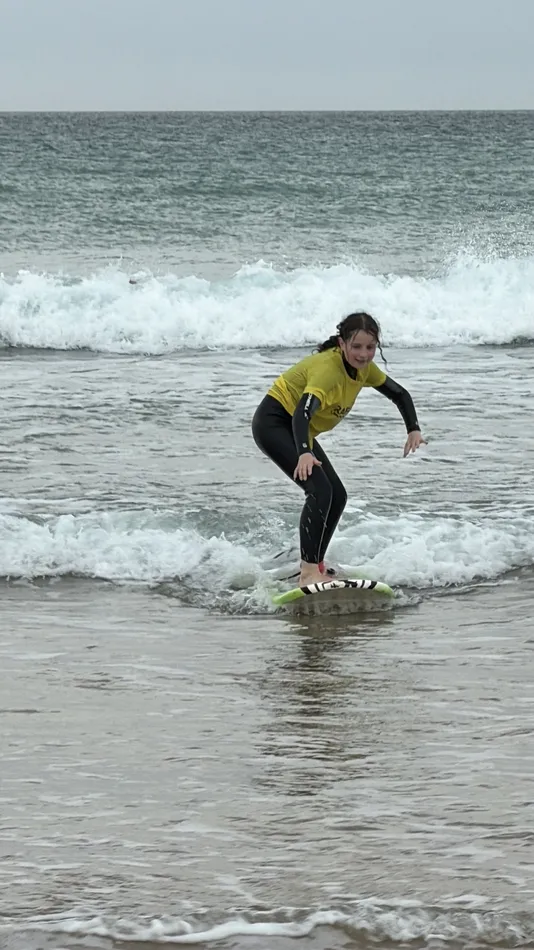
Our instructors, Nerea and Joshua, were both excellent; friendly, professional, and really encouraging in the water.
There was a nice balance between:
- letting you get on with it
- and giving proper, individual feedback.
We got tips on positioning, timing, and technique while actually surfing, which made a difference over the week.
By the end, we were all catching more waves and standing up more consistently.
What to know before you book
A couple of things worth being aware of:
- The boards this school uses (and many others we saw in this area) are slightly smaller than typical UK beginner foamies
→ They’re beginner-friendly enough, but a bit less forgiving - Lesson times change daily
→ You find out the day before
→ Slightly limiting when making plans outside the surfing, but it means better conditions - You’ll be tired
→ Two hours in the water is enough, especially for kids
→ Don’t plan too much else
Conil vs El Palmar for lessons
We chose to surf in Conil, even though we were staying in El Palmar.
It meant a 10-minute drive each day, but we were very happy with our surf school choice in Conil, and it was nice to spend time in both locations, which are so different. Conil also has many more facilities like proper ice cream parlours, supermarkets and ATMs, so we’d have needed to head in here sometimes anyway.
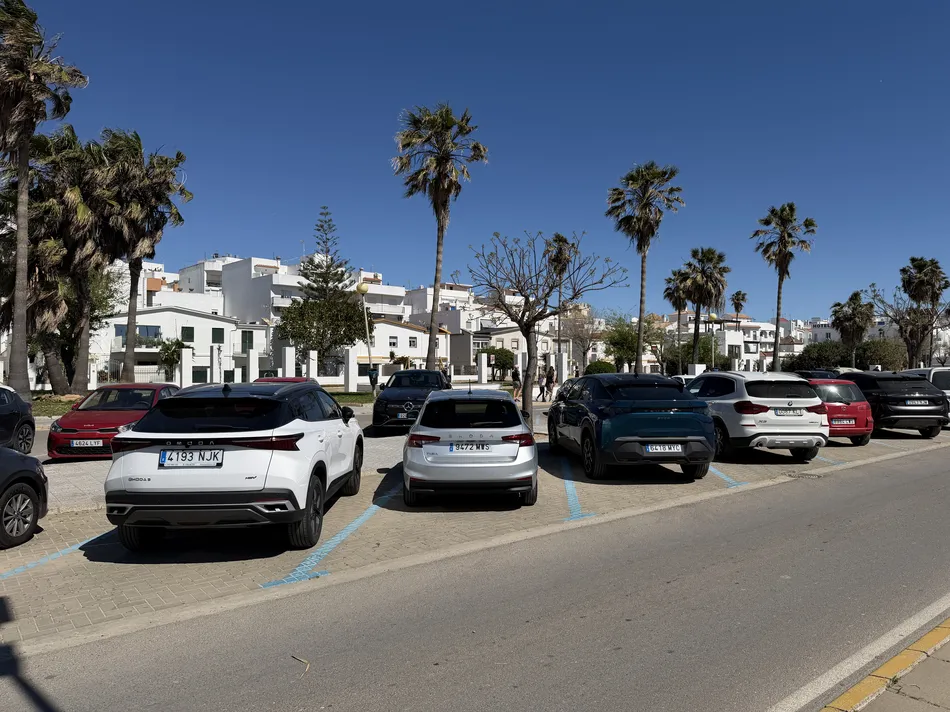
The car parks by the beach in Conil are free to park in before June 1st, as long as you’re in the blue zone (blue lines). The green zone is for local residents only.
Having said that, the convenience of walking to a surf school in El Palmar would be a big plus too.
If we did the trip again, I’d seriously consider booking lessons there instead; just to make the whole day even simpler.
How much a family surf holiday in Spain costs (DIY vs surf camps)
Cost was one of the biggest factors when planning this family surf holiday in Spain.
Before booking, we looked seriously at surf camps. They’re the obvious option, with everything organised for you, accommodation, food, and lessons all bundled together.
But once we looked at the details, it didn’t feel like the greatest of value!
What a typical surf camp includes
The option we looked at was around €900 per person for the week (with no discount for kids).
That included:
- 7 nights in a yurt-style setup
- 5 surf lessons + some theory
- Daily breakfast, 5 lunches, and 6 dinners (set meals – not great if kids are fussy – and for our group with a 7 and an 11 year old who don’t eat as much, no discount at all for kids seemed harsh)
- Tea, coffee and snacks
What we actually paid (DIY)
For comparison, here’s roughly what we spent as a group of three:
- Accommodation: €771 total (and that was a bit of a splurge on a nice villa – you can get cheaper!)
- Surf lessons: €135 per person
- Self catering food & cheap eating out: ~€400 total
That worked out at around €525 per person for the week.
That doesn’t include our travel to get there and back (I can’t put a number on this as we got there overland by rail using interrail passes and flew home one-way from Seville; so it completely depends on how you choose to travel) or car hire (which for us was £265 total).
What put us off surf camps
A few things made us hesitate:
- Cost for families
→ Paying full price for kids adds up quickly, and feels unfair especially when smaller kids definitely eat a lot less than adults. - Accommodation style
→ Yurts sound fun, but could be cold or damp if the weather wasn’t great
→ Not much indoor space if the weather turns (and it did rain a bit – I was pleased we had a proper indoor space!) - Location
→ About 4.5km from the beach
→ You’d still need a car - Lack of flexibility
→ Set meals (no choice for potentially fussy kids)
→ Fixed structure to the week and a lack of flexibility
None of these are dealbreakers on their own, but together it just didn’t feel like the extra cost was worth it.
Why DIY worked better for us
Booking it ourselves was much simpler than expected.
It really came down to organising:
- accommodation
- surf lessons
We could:
- eat what we wanted
- take things at our own pace with full flexibility
- keep the days simple
And overall, it worked out significantly better value.
What we’d do next time
We’d do the same again.
The only thing we might change is booking a surf school in El Palmar, just to avoid the short daily drive.
But overall, the DIY approach gave us more flexibility, more space, and better value.
What we did on our day off (don’t skip this 🐴)
We surfed Sunday to Thursday, then kept Friday as a day off before heading back to Seville airport and then home on Saturday.
Horse riding on the beach near Trafalgar
On the Friday afternoon, we went horse riding along the beach towards Trafalgar lighthouse.
It was a total bucket list experience, and one of the highlights of the trip!
We booked with Picadero Peña, which feels pretty rustic; no website, just a phone number on Google. But don’t let that put you off.
They were really responsive on WhatsApp (+34 653 30 91 58), the horses were ready when we arrived, and the staff were friendly and helpful throughout, even though there was a bit of a language barrier!
The ride was about 1.5 hours, on Andalusian horses that felt well looked after and nicely trained, and cost €50 per person. Not cheap, but definitely worth it.
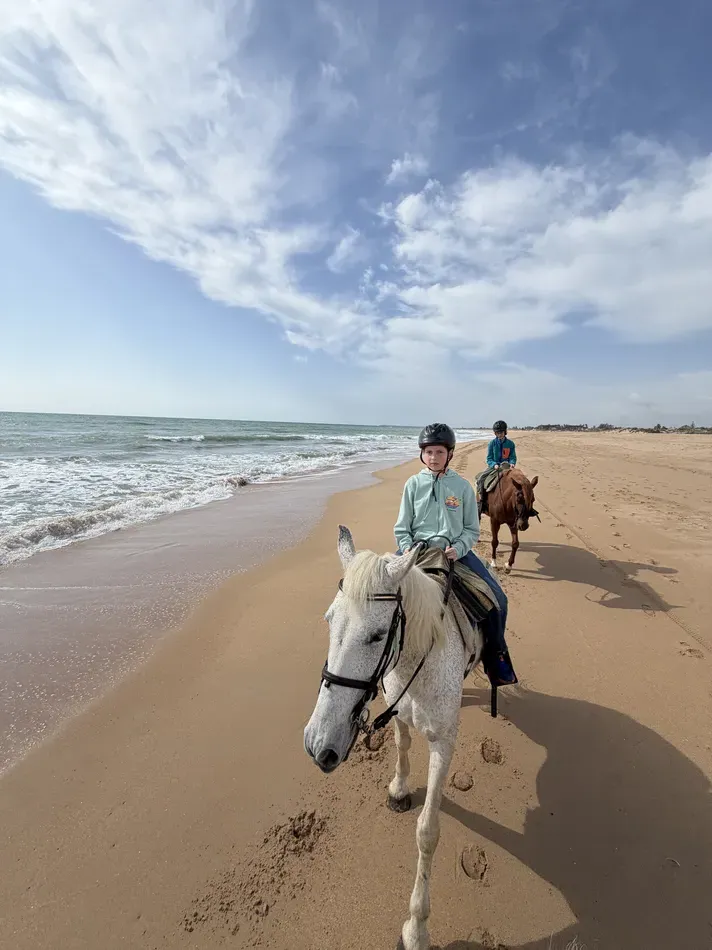
The horses were really great – we weren’t just plodding along nose-to-tail the whole time like on a beginners’ horse ride in the UK, which made it feel a bit more like a proper riding experience; but still very manageable, even if you’re not an experienced rider. (My kids are almost complete novices on horses, and they were fine).
Riding along the shoreline with the waves coming in around the horses’ feet was pretty special, even if my son’s horse had strong opinions about waves and made a sharp side step every time one got too close!
Why it’s worth building in a day off
It’s tempting to just surf every day, but having a break worked well.
By that point:
- everyone was a bit tired
- everyone’s muscles were starting to feel it
- and it was nice to do something completely different
It also gave the trip a bit more balance, rather than it being six identical days in a row.
So, would I recommend a family surf holiday in Spain?
Honestly? Yes, without hesitation.
The thing that surprised me most was how relaxed the whole week felt. It had all the ingredients of a proper beach holiday, slow mornings or afternoons (depending on when the surf lesson took place!), nowhere to be, loads of time outside; but the surfing gave each day a bit of a shape, if you’re someone (like me) who can’t lie around for days on end!
El Palmar is a big part of why we loved it. It’s not your typical resort at all – more like a slightly scruffy little surf town you might stumble across somewhere in Central America. No manicured pools or snazzy cocktail menus. Just beach, waves, and a very good beef taco if you know where to look! That’s exactly what makes it so good.
For us, combining it with an adventurous interrail trip getting all the way to the far south of Spain from the UK worked really well; a big, slightly exhausting travel adventure with a week of beachy time at the end to decompress. The best of both, basically.
And I think that’s exactly why we liked it so much.
If you’re on the fence: it’s a brilliant way to scratch that adventure itch without coming home needing a holiday to recover from your holiday.
What to read next
If this kind of trip appeals, these are worth a look next:
- Interrailing to Spain with kids from the UK: Our route to Southern Spain
→ how we travelled from Oxford to Seville by train, via Paris, Barcelona and Córdoba. - Affordable Family Adventure Travel: How We Keep Costs Down
→ the approach behind trips like this, and where we save vs spend - 6 Brilliant October Half Term Ideas for Adventurous Families
→ good options if you’re looking for something similar later in the year - 10 Brilliant Easter Holiday Ideas for Outdoorsy Families
→ trips that balance activity and downtime without feeling like hard work - Hut to hut hiking with kids
→ a different kind of trip, but with a similar mix of challenge and simplicity
